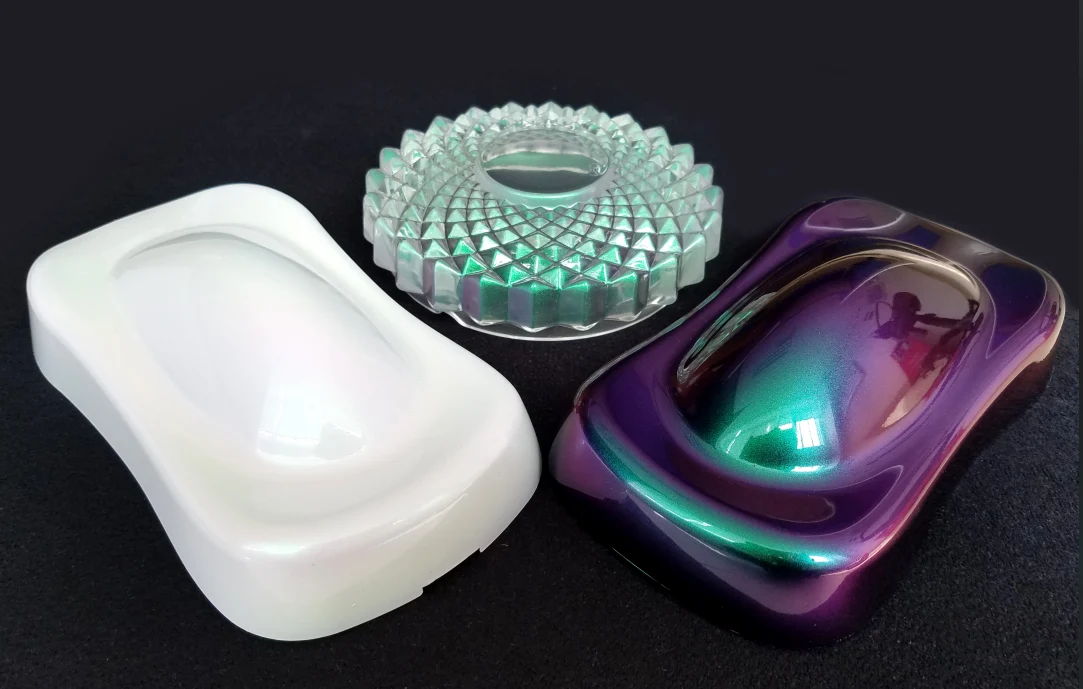
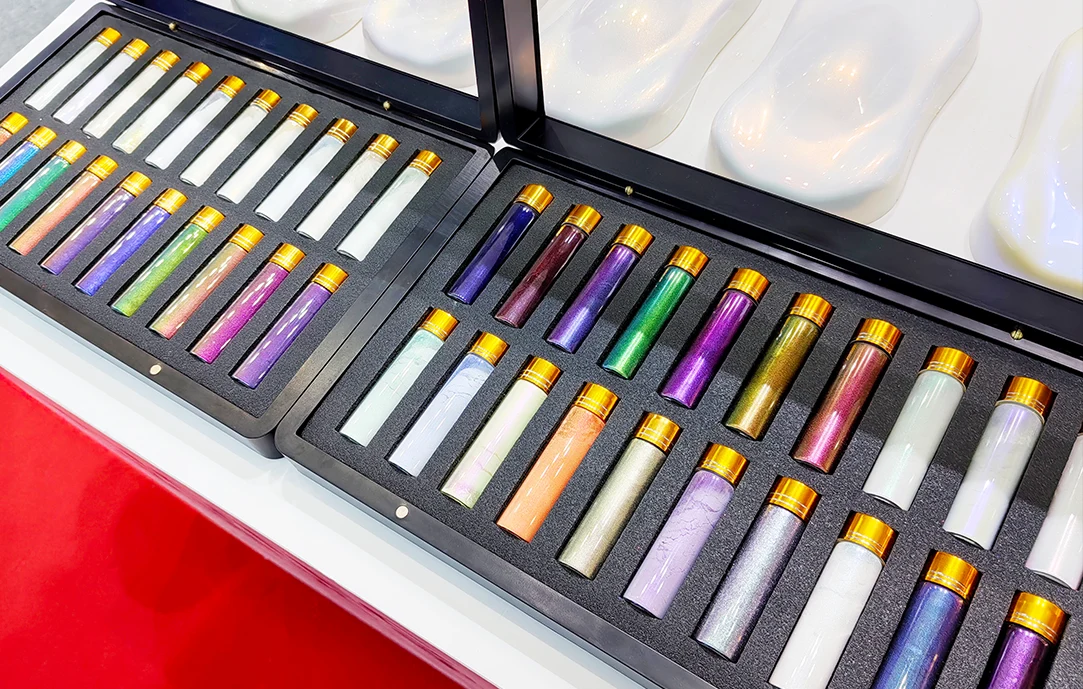
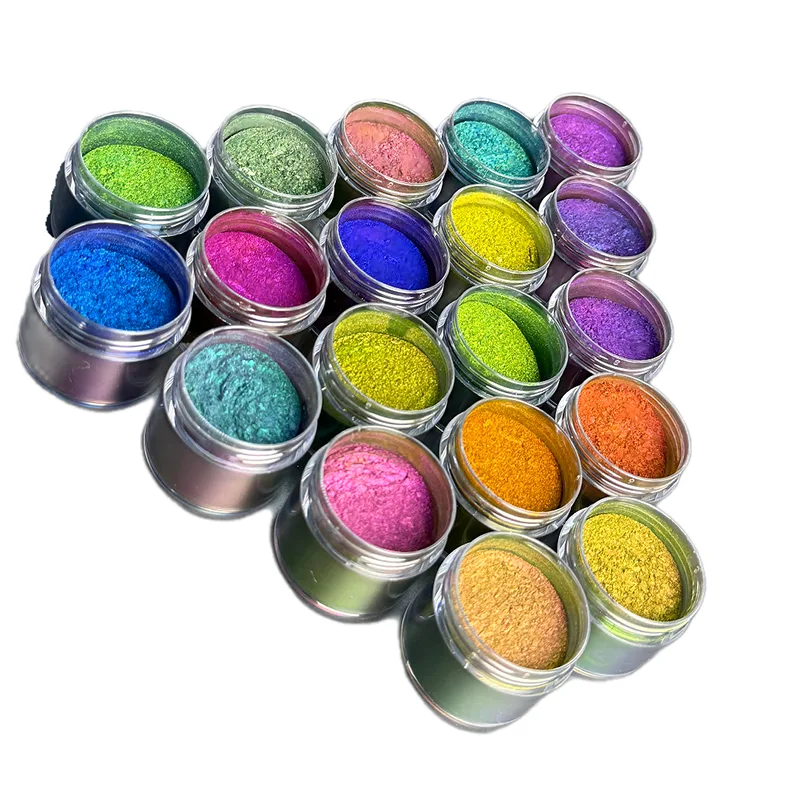
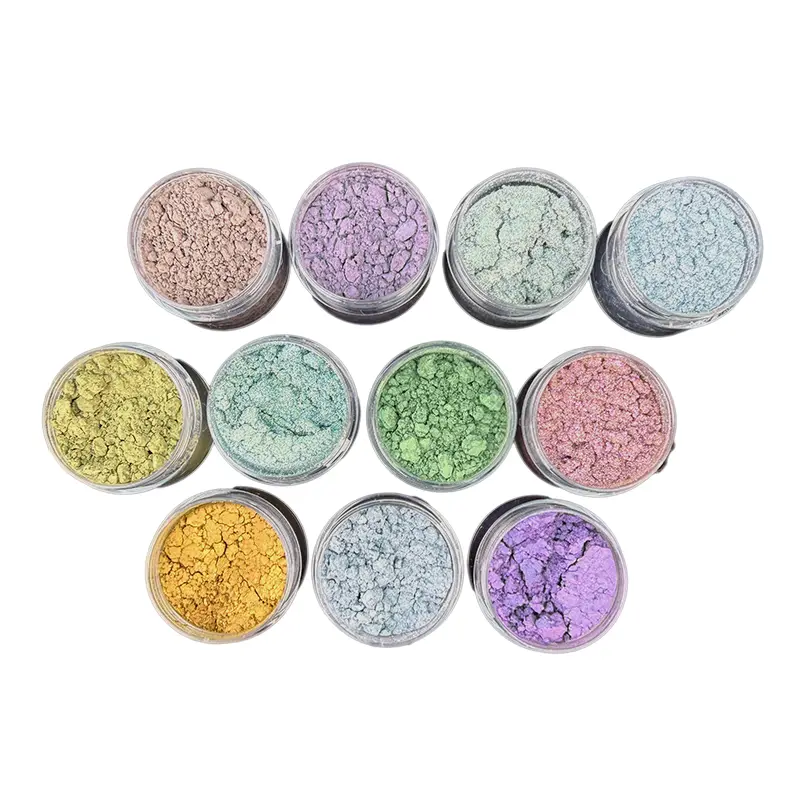
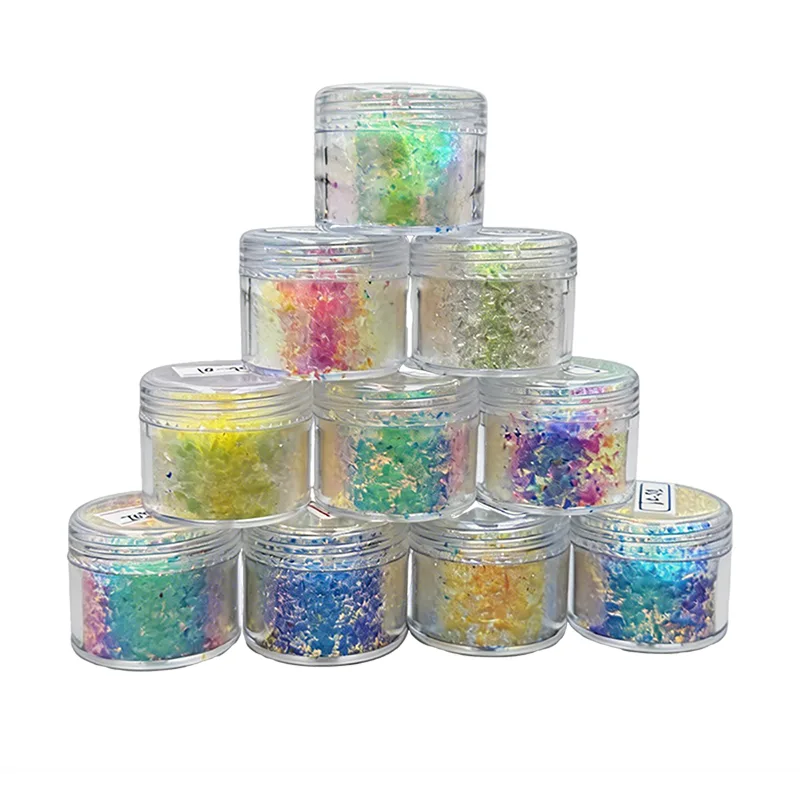
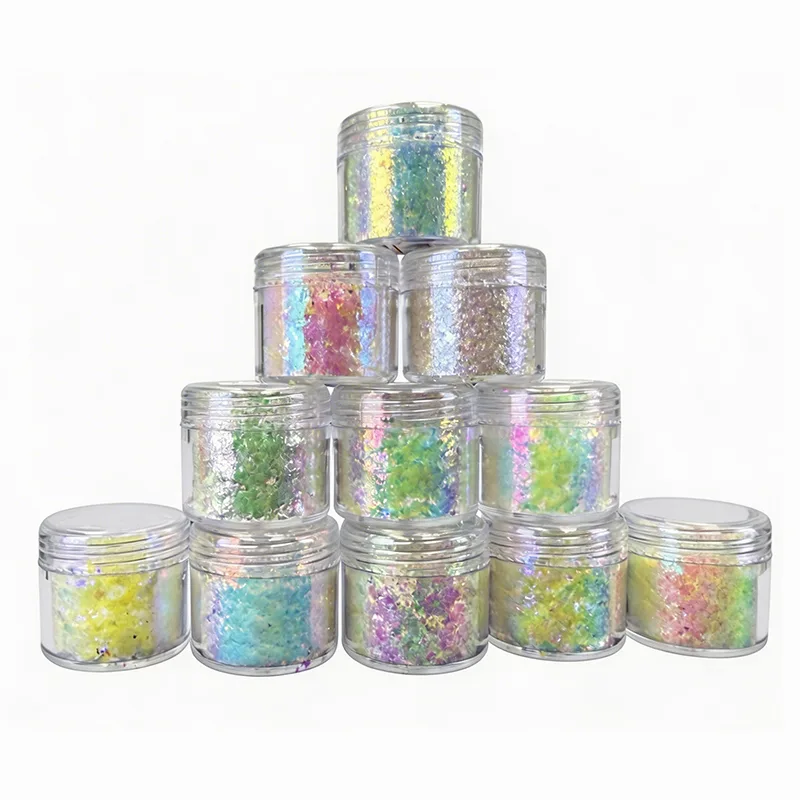
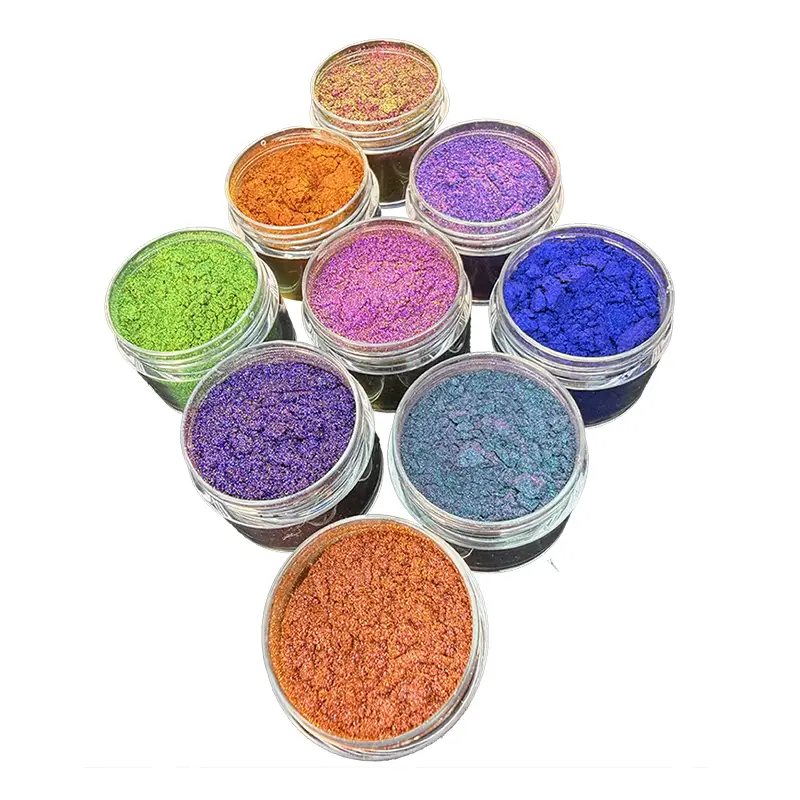
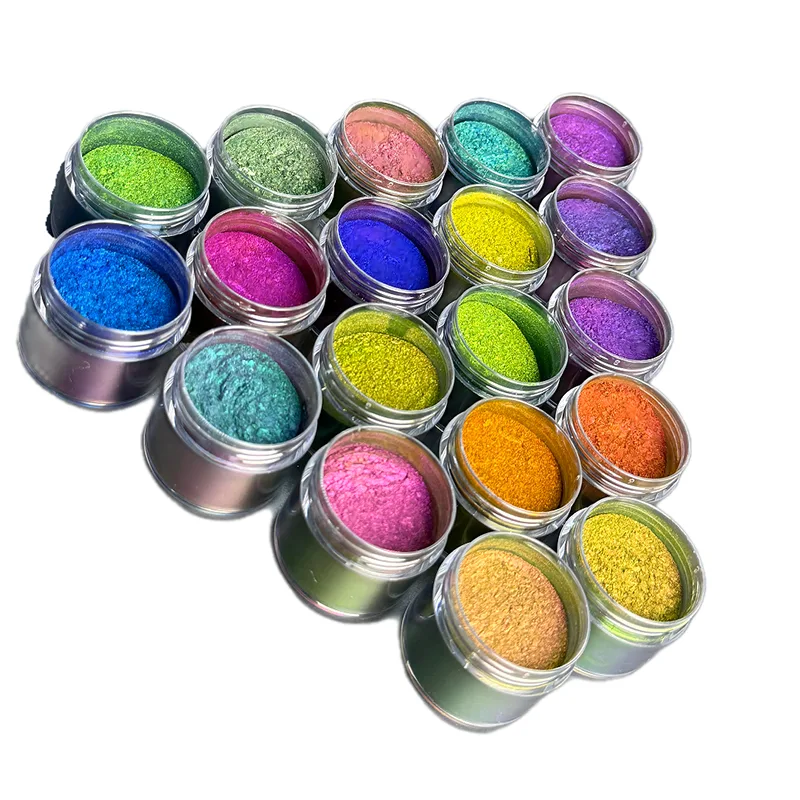
Classic Opaque Chameleon Pigments for Resin Art and Watercolor bring together rich opacity, color-shifting effects, and strong visual depth for creative applications. Unlike ordinary single-tone colorants, chameleon pigments can reveal different hues as the viewing angle or lighting condition changes. This article explains how these pigments work, why opacity matters, how to use them in resin and watercolor, how to avoid common application problems, and how to select pigment characteristics for different artistic projects.
Color is one of the most important elements in decorative art, but conventional pigments usually provide a relatively predictable visual result. A red pigment remains red, a blue pigment remains blue, and metallic colors primarily depend on reflection and surface texture. Chameleon pigments introduce another dimension: the apparent color can shift as the observer changes position or as the illumination changes.
Classic Opaque Chameleon Pigments for Resin Art and Watercolor are particularly interesting because they combine a noticeable color-changing appearance with comparatively strong coverage. This makes them useful for artists who want more than a transparent sparkle or simple pearlescent finish.
In resin art, opaque pigment can help create strong backgrounds, layered effects, decorative panels, jewelry, coasters, sculptures, and other cast objects. In watercolor-style applications, carefully formulated pigment can contribute unusual highlights, dimensional washes, and shifting accents.
The distinctive appearance of chameleon pigments is associated with controlled optical reflection. Many effect pigments use specially structured particles or layered materials that interact with incident light. Depending on the viewing angle, different wavelengths can become more prominent, producing a noticeable color transition.
This is why a single pigment can appear to move between related or contrasting shades. For example, a pigment may show green under one angle and shift toward blue, violet, gold, or another secondary tone under different conditions.
The final effect is influenced by several factors:
Resin is one of the most visually effective media for chameleon pigments because cured resin can provide a smooth, glossy surface that allows reflected light to travel across the pigment layer. This can make the color-shifting effect especially noticeable.
If the objective is a bold and saturated appearance, an opaque resin mixture can provide a consistent foundation. A controlled pigment-to-resin ratio is important because too little pigment may produce a weak effect, while excessive pigment can influence viscosity, curing behavior, or surface appearance depending on the formulation.
One of the most attractive techniques is to combine several resin layers. Artists can place chameleon pigment in a background layer and then add clear resin, metallic details, transparent color, glitter, or other decorative components above it.
Uneven dispersion can result in cloudy areas, concentrated color patches, or inconsistent transitions. Slow and thorough mixing is generally preferable to aggressive mixing that introduces excessive air bubbles.
| Resin Art Objective | Recommended Approach | Expected Visual Result |
|---|---|---|
| Strong background color | Use controlled pigment loading in an opaque resin base | Dense and saturated appearance |
| Deep dimensional effect | Combine pigmented and clear layers | Greater visual depth |
| Subtle color shift | Use a lower pigment concentration | Softer transition between hues |
| Decorative highlights | Apply pigment selectively to specific areas | Focused color-changing accents |
Watercolor presents a different technical environment. Unlike resin, watercolor relies heavily on water movement, paper absorbency, brush control, drying behavior, and the interaction between pigment and the paper surface.
Chameleon pigments can be used to add unusual visual details to illustrations, decorative paintings, greeting cards, mixed-media artwork, abstract compositions, and experimental color studies. Rather than covering an entire painting with a heavy effect, artists may obtain better control by using chameleon pigments as accent colors.
Too much water can make the pigment appear weak or uneven, while insufficient liquid can make brush application difficult. Testing different water-to-pigment ratios helps determine the ideal consistency for the desired technique.
Smooth watercolor paper may reveal a cleaner optical effect, while textured paper can scatter light and create a more organic appearance. The choice depends on whether the artwork requires precise color transitions or a textured decorative finish.
Chameleon pigment can be particularly effective on selected areas such as leaves, jewelry, fantasy objects, abstract shapes, lettering, or illuminated details. Strategic application often produces a more sophisticated result than using the pigment uniformly.
Although the same pigment concept can be applied to both resin and watercolor, the working methods are significantly different. Understanding the characteristics of each medium helps artists achieve more predictable results.
| Feature | Resin Art | Watercolor |
|---|---|---|
| Surface | Usually glossy and cured | Usually absorbent paper |
| Color strength | Can be highly saturated | Often depends strongly on dilution |
| Layering | Excellent for dimensional casting | Excellent for washes and transparent layering |
| Mixing concern | Uniform dispersion and bubble control | Water ratio and brush distribution |
| Visual effect | Strong depth and reflective color shifts | Subtle highlights and artistic transitions |
The best choice depends on the artistic objective. Resin is particularly suitable when a dramatic three-dimensional effect is required, while watercolor can provide a lighter, more expressive interpretation.
Not every effect pigment performs identically. Buyers, artists, and manufacturers should evaluate the pigment according to the intended medium instead of focusing only on its color sample.
Even high-quality chameleon pigments may produce unsatisfactory results if the application process is poorly controlled. The following problems are among the most common.
| Problem | Possible Cause | Practical Solution |
|---|---|---|
| Color looks dull | Unsuitable base, insufficient light reflection, or excessive dilution | Test another base color and adjust pigment concentration |
| Uneven color | Poor dispersion | Mix carefully and verify compatibility with the medium |
| Effect is too weak | Pigment concentration may be too low | Increase concentration gradually during small-scale testing |
| Surface looks overly textured | Particle size or excessive loading | Test a finer grade or reduce pigment concentration |
| Color differs from sample | Different substrate or lighting conditions | Evaluate samples under the actual intended lighting |
A key lesson is that a pigment sample should never be evaluated independently from its application environment. The same powder can look substantially different when applied to a white base, black base, transparent resin, textured paper, or glossy surface.
A repeatable testing procedure can reduce wasted materials and improve consistency. Whether the project is personal artwork or commercial production, the following workflow provides a useful starting point.
The versatility of Classic Opaque Chameleon Pigments makes them suitable for projects where ordinary colors may feel predictable. Some practical ideas include:
Because the effect changes with viewing direction, these pigments are especially useful for objects that people can physically move and inspect from different angles.
Proper storage is essential for maintaining pigment quality. Keep pigment containers tightly sealed when not in use and store them in a clean, dry environment away from unnecessary moisture and contamination.
During handling, avoid introducing foreign particles into the pigment container. Use clean tools for measuring and mixing. For professional workshops and manufacturing environments, appropriate personal protective equipment and the supplier's safety documentation should be followed.
Commercial users should also retain product identification and batch information. This makes it easier to trace material performance when producing repeated designs or investigating differences between batches.
Q1: What are Classic Opaque Chameleon Pigments used for?
They are used to create opaque or highly visible color effects that change appearance according to viewing angle and lighting. Common applications include resin art, decorative crafts, artistic coatings, and selected watercolor or mixed-media projects.
Q2: Can chameleon pigments be used in epoxy resin?
Many chameleon pigments are suitable for resin applications, but compatibility should always be confirmed with the specific pigment and resin system. A small test batch is recommended before full production.
Q3: Why does the pigment change color?
The color-shifting effect is created by optical interaction with light. Structured pigment particles can reflect different wavelengths differently depending on viewing angle, producing the characteristic chameleon appearance.
Q4: Does the background color affect the final effect?
Yes. Background color can significantly influence perceived brightness, saturation, contrast, and depth. Testing the pigment over the actual intended substrate is therefore important.
Q5: Can these pigments be mixed with other colors?
They can often be combined with other compatible colorants, but mixing may change the original optical effect. For best control, test combinations in small quantities before applying them to finished artwork.
Q6: How can I make the chameleon effect more noticeable?
Use an appropriate base, maintain a suitable pigment concentration, apply the material evenly, and evaluate the finished surface under directional lighting from different viewing angles.
Q7: Are opaque chameleon pigments suitable for commercial production?
They can be useful for commercial decorative products when the pigment is compatible with the manufacturing process and provides consistent performance. Buyers should evaluate samples, specifications, batch consistency, and application requirements before bulk production.
Q8: How should I select a pigment supplier?
Consider product consistency, technical support, application knowledge, available color ranges, sample services, packaging, production capacity, and communication. For recurring projects, reliable batch-to-batch consistency is particularly important.
Choosing the right effect pigment is about more than selecting an attractive color chart. The pigment must work with the intended medium, provide the required opacity and color transition, and deliver a consistent visual effect during actual application.
Huizhou Foryou Optical Technology Co., Ltd. focuses on optical effect pigment solutions for creative and decorative applications. For artists, product developers, craft brands, distributors, and manufacturers looking for Classic Opaque Chameleon Pigments for Resin Art and Watercolor, professional product information and application guidance can help simplify material selection.
Whether you need samples for a new resin project, pigment solutions for watercolor experiments, or materials for larger-scale production, feel free to contact us to discuss your requirements, application conditions, color expectations, packaging needs, and purchasing plans.
Contact us today to explore the right chameleon pigment solution for your next creative project.
-