Huizhou Foryou Optical Technology Co., Ltd.
News

How Do Transparent Color-Shifting Pigments for Car Paint Revolutionize Automotive Surface Design?

2026-07-06 0 Leave me a message

Transparent Color-Shifting Pigments for Car Paint are redefining how modern vehicles achieve depth, visual motion, and premium aesthetics without relying on heavy metallic layers or traditional solid coatings. This article explores how these advanced pigments work, why they are becoming essential in automotive finishing systems, and how manufacturers, designers, and coating engineers can use them to solve common problems such as fading, limited color dynamics, and poor environmental durability. You will also learn about material structures, application methods, performance advantages, and real-world industrial considerations that influence their adoption.

Transparent Color-Shifting Pigments for Car Paint


Table of Contents


1. Introduction to Color-Shifting Pigments

The automotive industry has always been driven by visual innovation. From matte finishes to metallic flakes, manufacturers constantly seek new ways to differentiate vehicle appearance. Transparent Color-Shifting Pigments for Car Paint represent one of the most advanced evolutions in this field.

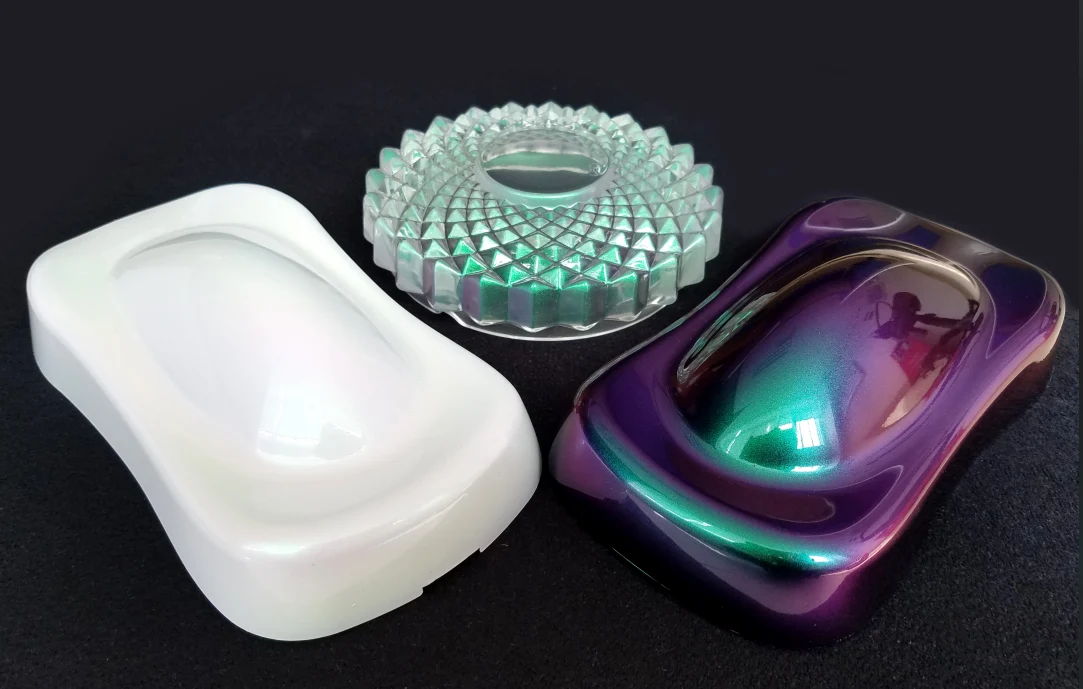
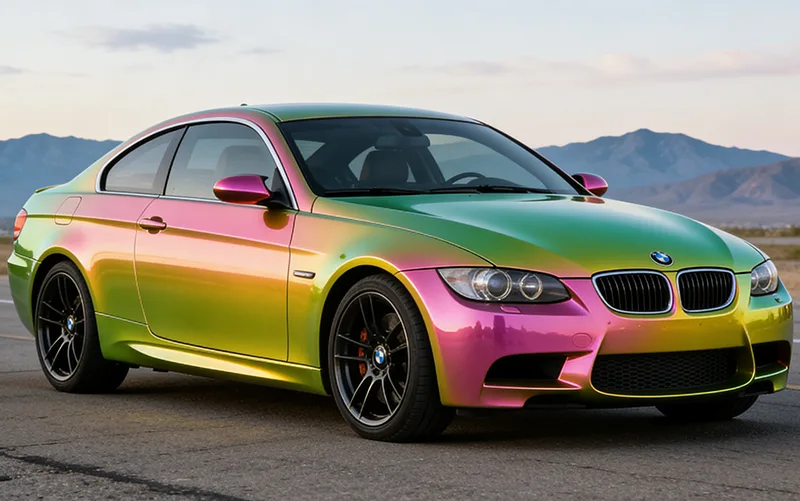
Unlike conventional pigments that reflect a single static color, these advanced materials interact with light in multiple ways depending on viewing angle, illumination intensity, and surface curvature. The result is a dynamic “chameleon-like” appearance that changes subtly or dramatically as the vehicle moves.

This technology is especially important for premium automotive brands seeking distinctive visual identity while maintaining durability and production efficiency.


2. The Science Behind Transparent Color-Shifting Pigments

The core principle behind Transparent Color-Shifting Pigments for Car Paint is optical interference. Instead of relying solely on chemical color absorption, these pigments manipulate light waves at a microscopic level.

When light strikes the pigment layers, some wavelengths are reflected while others are canceled out through interference. This produces shifting hues depending on the angle of observation.

Key optical behaviors include:

  • Thin-film interference effects
  • Multi-layer reflection and refraction
  • Angle-dependent wavelength cancellation
  • Light scattering control via transparent substrates

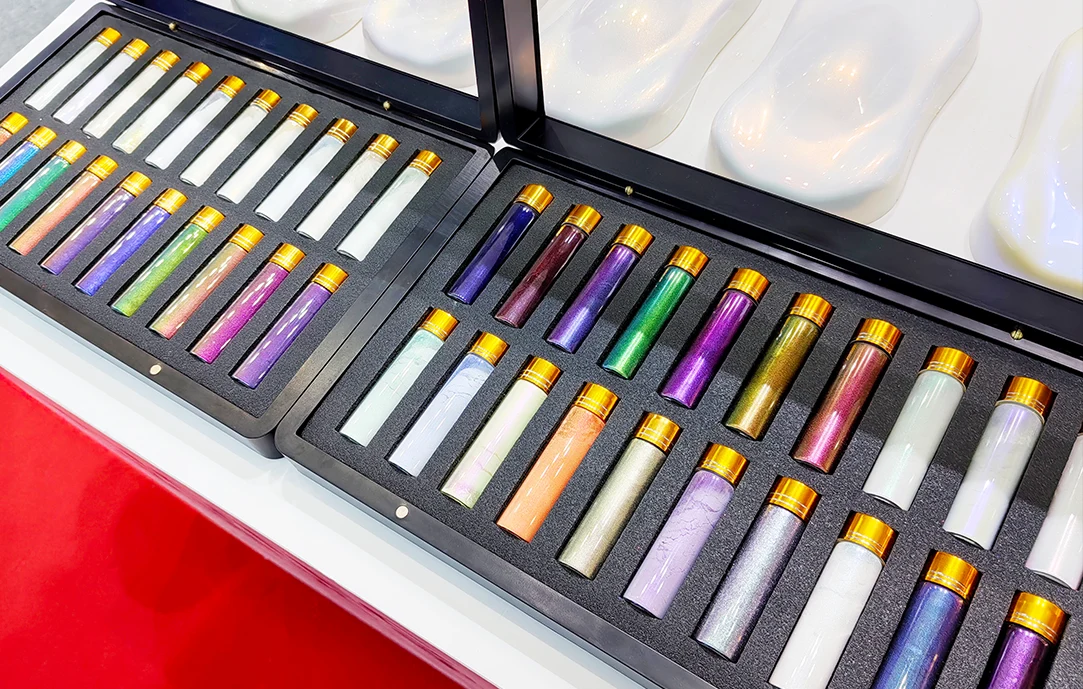
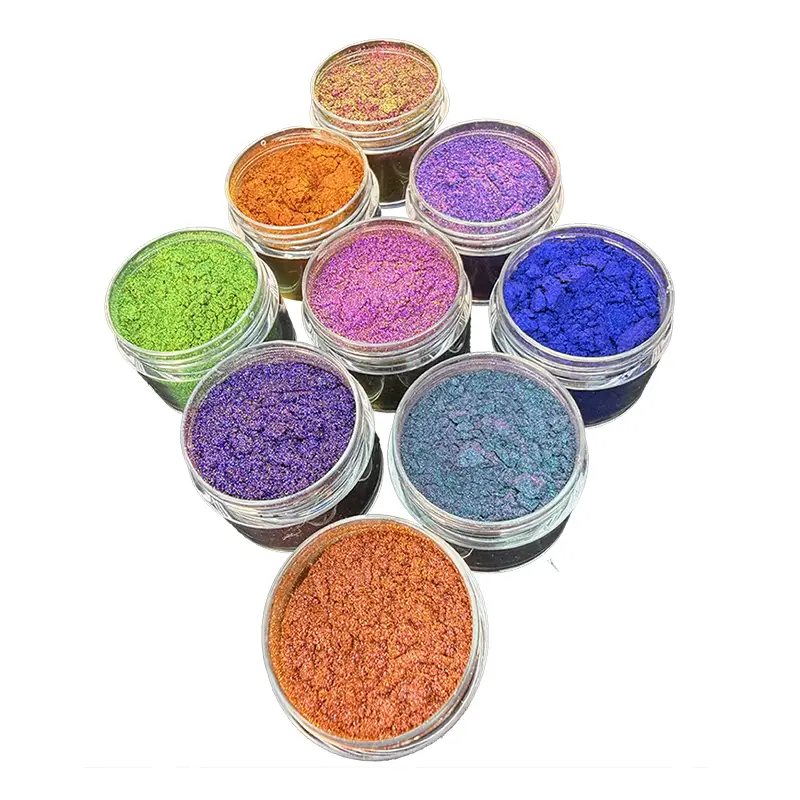
This science allows coatings to appear blue in one angle, purple in another, and sometimes even green or gold depending on structural layering.


3. Material Composition and Optical Mechanisms

Transparent Color-Shifting Pigments for Car Paint are typically built from engineered microstructures rather than traditional dye chemistry.

Common components include:

Component Function Performance Impact
Metal oxide coatings Provide reflective interference layers Enhances color shift intensity
Transparent mica substrates Carrier structure for pigments Improves clarity and depth
Polymer binders Ensure adhesion to paint systems Improves durability and flexibility
Protective nano-coatings UV and weather resistance Extends coating lifespan

The combination of transparency and layered reflection is what gives these pigments their unique “floating color” effect.


4. Key Benefits in Automotive Coatings

Automotive manufacturers choose Transparent Color-Shifting Pigments for Car Paint not only for aesthetics but also for functional improvements in coating systems.

  • Enhanced visual depth: Creates multi-dimensional surface appearance.
  • Premium branding effect: Vehicles appear more luxurious and technologically advanced.
  • Reduced repaint complexity: Maintains consistent appearance across panels.
  • UV stability: High resistance to fading compared to organic pigments.
  • Design flexibility: Works in basecoat-clearcoat systems.

These benefits make them particularly valuable in electric vehicles, concept cars, and limited-edition automotive releases.


5. Comparison with Traditional Automotive Pigments

Understanding the differences between conventional pigments and Transparent Color-Shifting Pigments for Car Paint helps clarify their industrial value.

Feature Traditional Pigments Color-Shifting Pigments
Color behavior Static Dynamic and angle-dependent
Light interaction Absorption-based Interference-based
Visual depth Limited High dimensionality
Durability Moderate High with proper coating systems

While traditional pigments remain cost-effective, they cannot replicate the optical complexity of modern color-shifting systems.


6. Application Methods in Car Paint Systems

Applying Transparent Color-Shifting Pigments for Car Paint requires precise control over coating layers to ensure optimal optical performance.

Typical application process:

  1. Surface preparation and priming
  2. Basecoat application (color foundation layer)
  3. Pigment dispersion coating (interference layer)
  4. Clearcoat sealing for protection and gloss enhancement

Each layer must be carefully balanced. Too thick a basecoat can reduce transparency, while improper dispersion can weaken the color-shifting effect.

Automotive manufacturers often use automated spray systems to ensure uniform pigment distribution across complex body geometries.


7. Technical Challenges and Solutions

Despite their advantages, Transparent Color-Shifting Pigments for Car Paint introduce several engineering challenges.

  • Cost sensitivity: Advanced materials increase production cost.
  • Application precision: Requires strict process control.
  • Color consistency: Environmental factors may influence final appearance.
  • Repair complexity: Matching repaired sections is more difficult.

Solutions include:

  • Advanced pigment dispersion technology
  • Automated robotic spraying systems
  • Standardized color calibration systems
  • UV-stable protective coatings

8. Industrial and Commercial Use Cases

Transparent Color-Shifting Pigments for Car Paint are widely used beyond luxury automotive manufacturing.

  • High-end sports cars and supercars
  • Electric vehicle branding differentiation
  • Motorcycles and concept vehicles
  • Custom automotive tuning industry
  • Limited-edition promotional vehicles

In each application, the goal is to create a visually memorable product that stands out in competitive markets.


9. Future Trends in Automotive Pigment Technology

The next generation of Transparent Color-Shifting Pigments for Car Paint is expected to integrate smart materials and nanotechnology enhancements.

Emerging trends include:

  • Temperature-responsive color shifting
  • Electrically tunable pigment layers
  • Self-healing transparent coatings
  • Eco-friendly pigment formulations

These innovations aim to combine aesthetics with sustainability and functional performance, reshaping how automotive surfaces interact with their environment.


10. Frequently Asked Questions

Q1: Are Transparent Color-Shifting Pigments durable?
Yes. When properly formulated with UV-resistant binders and clearcoats, they offer excellent long-term durability.

Q2: Do they require special maintenance?
Maintenance is similar to premium automotive paint systems, though careful washing is recommended to preserve optical clarity.

Q3: Can they be used in standard automotive workshops?
Yes, but they require trained technicians and controlled application environments for best results.

Q4: Are they suitable for mass production vehicles?
They are increasingly being adopted in mid-to-high-end production segments as costs decrease.

Q5: Do they affect repainting or repair processes?
Yes, repairs require color-matching expertise due to the dynamic optical nature of the pigments.


11. Conclusion and Industry Outlook

Transparent Color-Shifting Pigments for Car Paint are no longer just a niche innovation; they are becoming a defining element of modern automotive design. By merging optical science with advanced material engineering, they allow manufacturers to create visually dynamic surfaces that enhance both brand identity and user experience.

As technology continues to evolve, we can expect even more sophisticated pigment systems that combine interactivity, sustainability, and performance in a single coating solution.

Huizhou Foryou Optical Technology Co., Ltd. continues to contribute to advanced optical material development, supporting industries that demand precision, innovation, and high-performance surface solutions.

For professional consultation, technical support, or customized pigment solutions, feel free to contact us today. Our team is ready to help you explore the next generation of automotive coating technology — contact us and start your project with confidence.

Related News
Leave me a message
X
We use cookies to offer you a better browsing experience, analyze site traffic and personalize content. By using this site, you agree to our use of cookies.Privacy Policy
RejectAccept