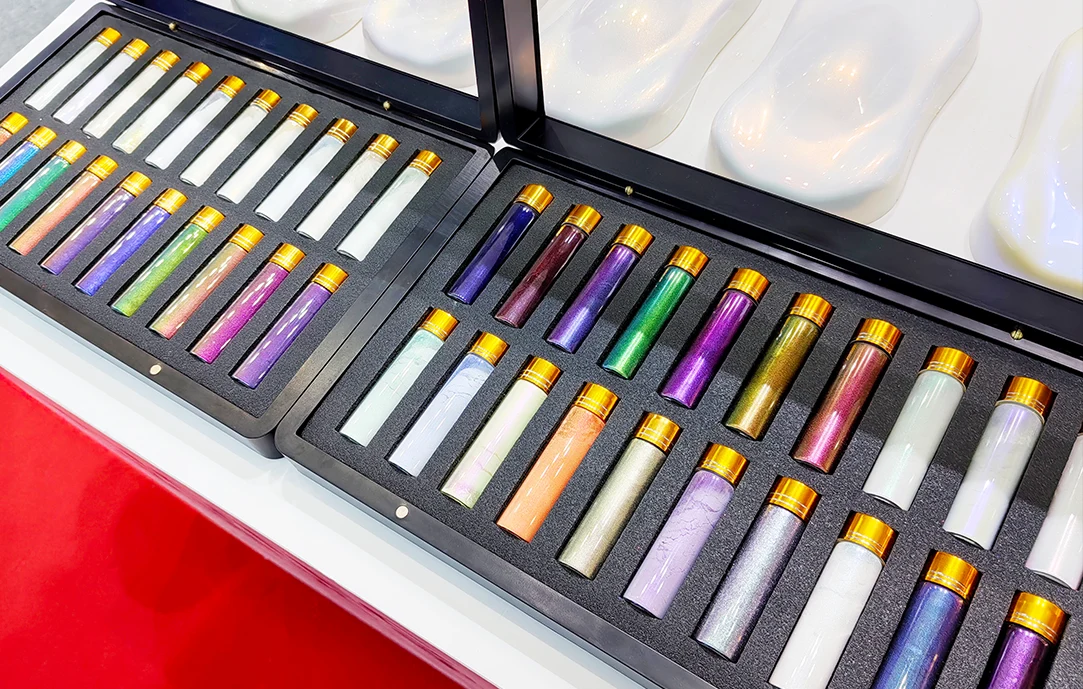
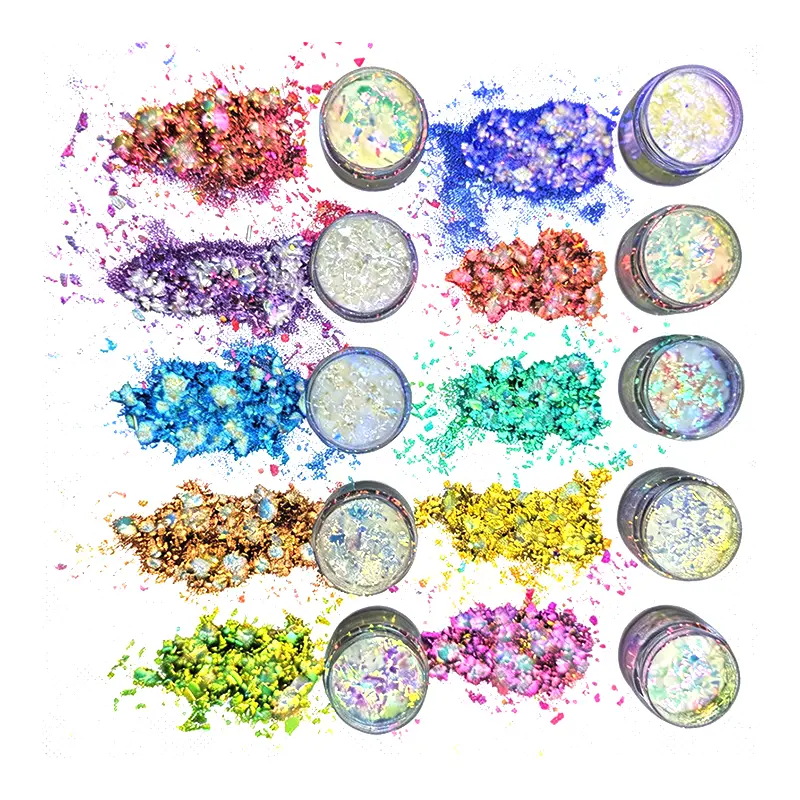
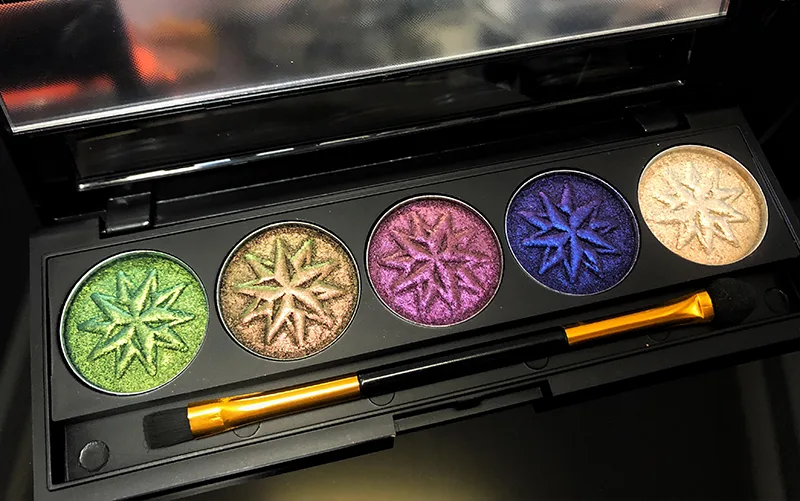
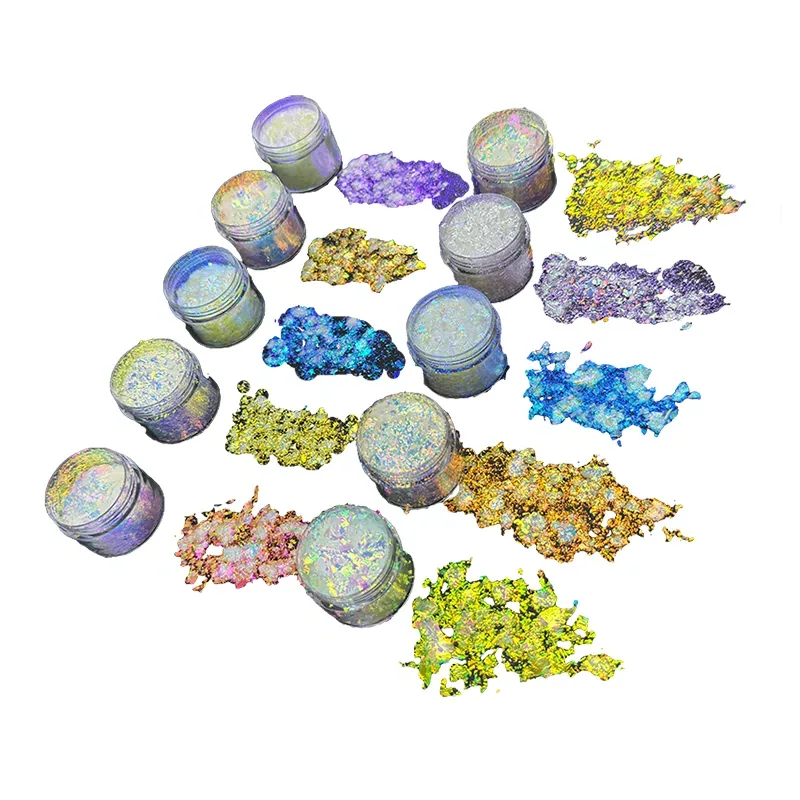
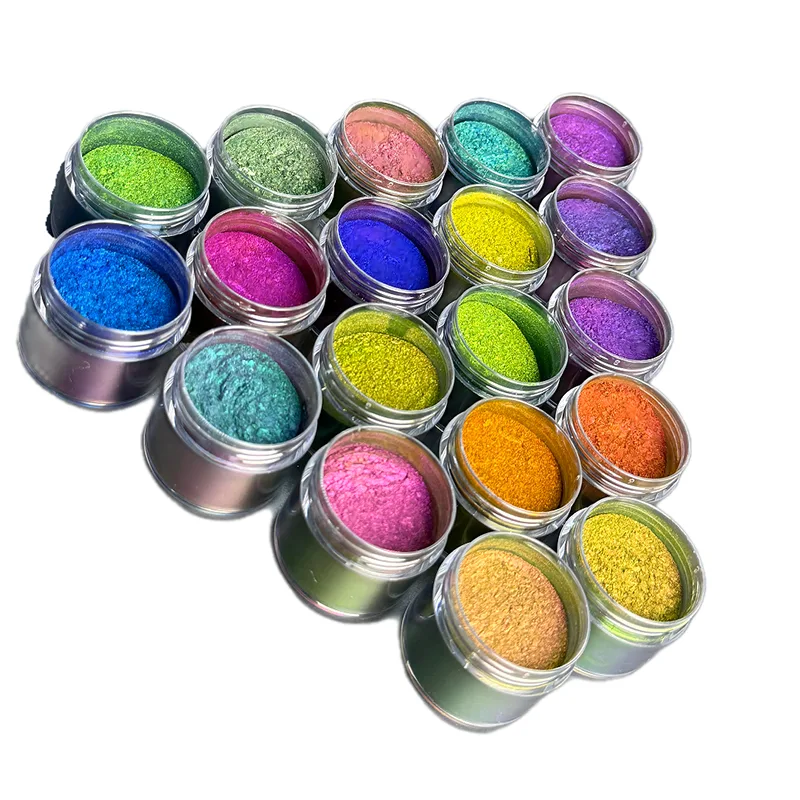
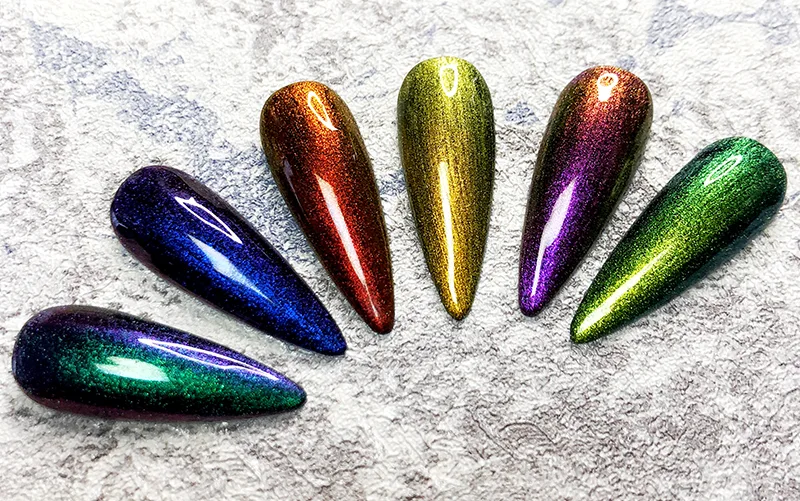
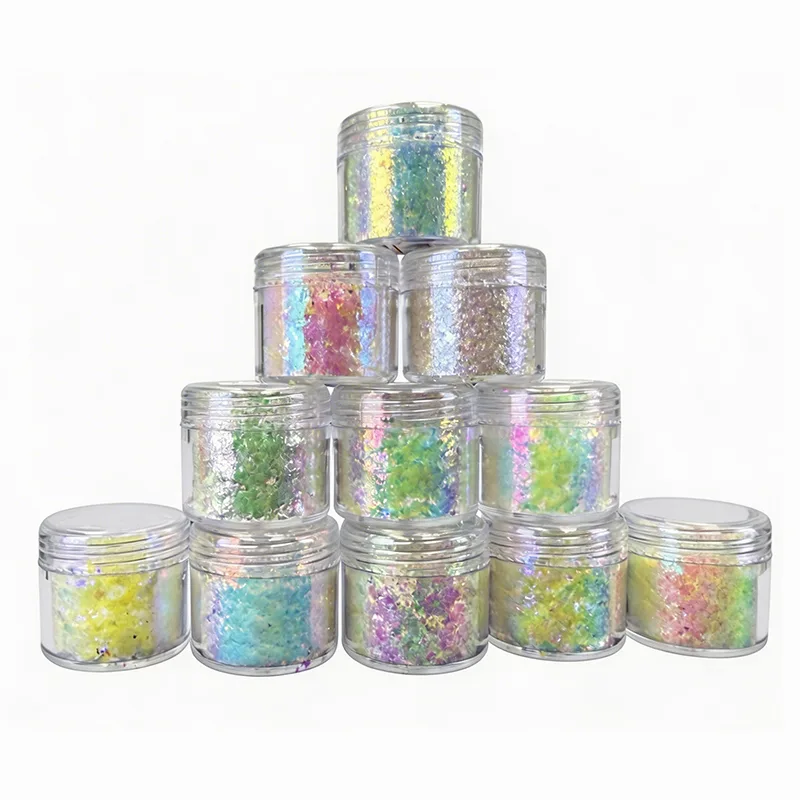
High-chroma transparent color-shifting pigments are specialized optical pigments designed to create vivid, angle-dependent color effects while allowing the underlying coating layer to remain visually influential. Unlike conventional solid pigments that primarily produce one stable hue, these pigments can create dramatic transitions as the viewing angle or lighting condition changes. For automotive paint manufacturers, refinish formulators, custom coating companies, and vehicle designers, the challenge is not simply achieving a strong color shift. The finished coating must also provide transparency, saturation, depth, dispersion stability, application consistency, and adequate resistance to outdoor conditions. This guide explains how these pigments work, how they interact with base coats and clear coats, and what formulators should evaluate before commercial production.
Understand transparency, interference, and angle-dependent color travel.
Explore how substrate, base coat, pigment layer, and clear coat interact.
Review dispersion, application consistency, loading, and surface preparation.
Evaluate visual quality, durability, compatibility, and batch consistency.
High-chroma transparent color-shifting pigments belong to the special-effect pigment family. Their purpose is not simply to add a conventional color to automotive paint, but to create a controlled optical appearance that changes with viewing geometry and illumination.
The term high-chroma refers to strong, vivid color appearance, while transparent indicates that the pigment does not behave like a conventional opaque covering pigment. Instead, light can interact with both the optical pigment and the layers underneath it. This characteristic gives coating formulators greater freedom to build visual depth and layered color effects.
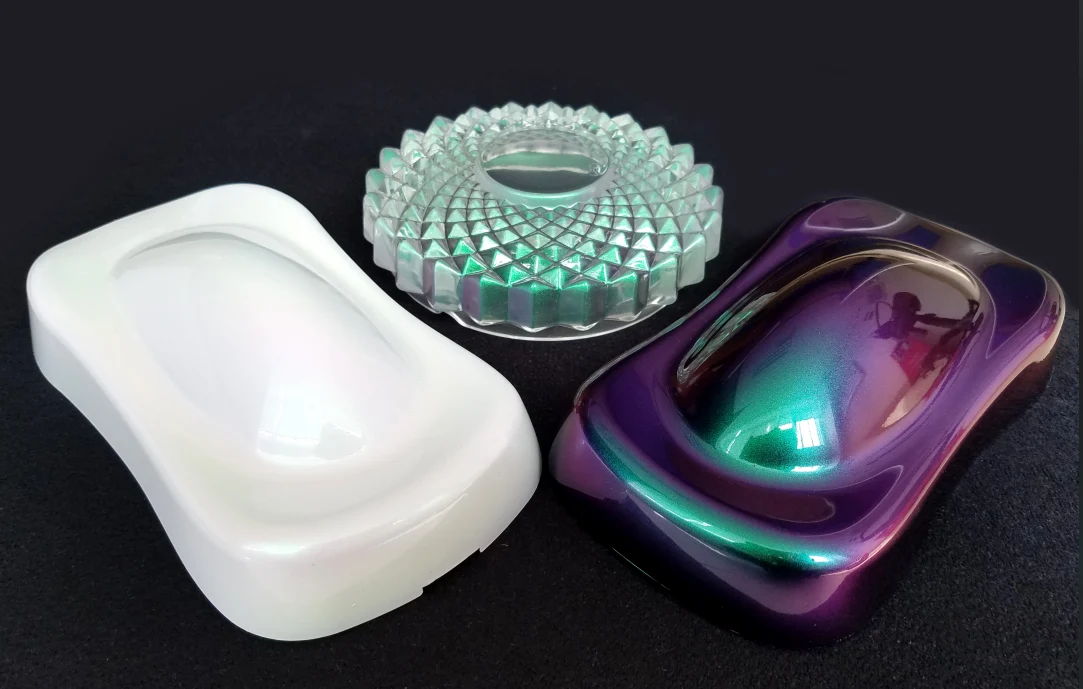
Color-shifting pigments commonly rely on interference effects produced by carefully engineered layered structures. As light interacts with these structures, selected wavelengths are reflected differently depending on viewing conditions. This creates the characteristic transition between hues often associated with chameleon or color-travel automotive finishes.
Conventional automotive color pigments mainly absorb selected portions of visible light and return the remaining wavelengths to the observer. Color-shifting optical pigments work differently. Their visual behavior is strongly influenced by thin-film interference and the interaction of reflected and transmitted light.
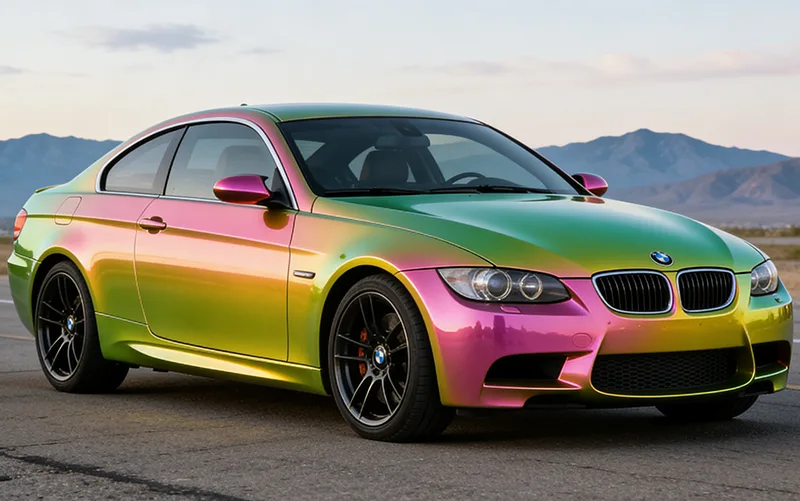
When a vehicle is viewed from different angles, the optical path through the pigment structure changes. As a result, the wavelengths that are most strongly perceived can also change. A finish may therefore appear green from one direction, move toward blue or violet from another, and reveal a warmer secondary tone from a grazing angle.
Transparency makes this particularly interesting for automotive coatings. Because the effect layer can allow the underlying color to influence the final appearance, formulators can create multiple visual variations using the same general pigment technology. Transparent interference pigments are known to interact strongly with the color of the background layer, which is why substrate and base-coat selection should be considered early in development.
| Coating Element | Primary Function | Influence on Appearance |
|---|---|---|
| Substrate | Provides the physical surface | Affects smoothness and final uniformity |
| Base Coat | Establishes the background color | Strongly influences depth, contrast, and hue |
| Effect Layer | Creates optical color travel | Determines the primary shifting effect |
| Clear Coat | Protects and enhances the finish | Influences gloss, clarity, depth, and surface appearance |
Automotive appearance has become increasingly sophisticated. Manufacturers and custom finish specialists are looking beyond conventional solid, metallic, and pearl colors to create surfaces with greater depth and visual movement. Industry coverage has identified high-chroma colors, transparency, and special-effect pigments as important tools for developing differentiated automotive finishes.
For premium vehicle coatings, high-chroma transparent color-shifting pigments can address several common design goals:
However, stronger visual performance also means tighter process control. Automotive effect coatings can be more demanding than traditional finishes because vehicle geometry, spray conditions, film build, and component production differences can affect the final appearance.
One of the most important considerations is the relationship between the transparent color-shifting layer and the base coat underneath it. A transparent optical pigment does not exist visually in isolation. The background can alter perceived brightness, saturation, contrast, and overall color character.
Dark base coats are frequently used when the objective is to create strong contrast and emphasize the color-shifting effect. A light or metallic background, on the other hand, may produce a different visual balance and allow more of the underlying surface character to remain visible. The appropriate base depends on the target finish rather than a universal formula.
The clear coat also deserves attention. A high-quality clear layer can contribute to gloss, optical clarity, surface protection, and perceived depth. If the clear coat changes the refractive behavior, gloss level, or surface uniformity significantly, the finished color may not look identical to the original laboratory drawdown.
Often enhances contrast and makes transparent color-shifting effects more pronounced.
Can produce a lighter, more translucent visual character and reveal more background influence.
Supports gloss, protection, surface clarity, and the final visual depth of the coating.
Choosing a high-chroma transparent color-shifting pigment should begin with the desired finished coating rather than the pigment name alone. Automotive paint developers should consider the complete application system.
For example, published technical information for automotive color-shifting pigment systems identifies transparency, particle-size characteristics, thermal resistance, and controlled dosage as important technical parameters. Exact requirements should always be confirmed against the supplier's current technical documentation and the customer's coating system.
The visual quality of a color-shifting automotive coating depends heavily on formulation and application. A pigment that performs beautifully in a laboratory sample can produce a different result if dispersion, film thickness, substrate preparation, or spraying conditions change.
Several practical points deserve particular attention:
Some supplier guidance specifically recommends low-to-medium dispersion speeds for certain color-shifting pigment structures and cautions against high-shear milling methods. Such instructions are product-specific, so formulators should always follow the technical data supplied for the selected grade.
| Observed Problem | Possible Cause | Practical Direction |
|---|---|---|
| Color looks dull | Unsuitable base color, pigment loading, or surface condition | Review the complete coating stack and test different base coats |
| Weak color travel | Pigment selection or film structure is not optimized | Compare pigment grades and optimize effect-layer thickness |
| Uneven appearance | Inconsistent spray or pigment orientation | Standardize application parameters and operator technique |
| Batch-to-batch variation | Pigment consistency or formulation variation | Establish incoming material and finished-panel comparison procedures |
| Surface lacks depth | Clear coat, substrate, or surface smoothness | Improve substrate preparation and evaluate the clear-coat system |
High-chroma transparent color-shifting pigments are particularly suitable for applications where visual differentiation is a major objective. Their transparency and angle-dependent behavior make them useful for premium and customized automotive finishes.
Used to create distinctive exterior colors with stronger chroma, depth, and movement.
Suitable for customized vehicles where unique color transitions are part of the design concept.
Can help create visual effects for luxury, performance, concept, and limited-edition vehicles.
Can be evaluated during development of distinctive factory-style or near-OEM automotive finishes.
The automotive coatings industry has long used effect pigments to create differentiated appearances, while newer high-chroma and transparent technologies have expanded the available color space.
A successful laboratory sample should not be considered sufficient evidence for commercial automotive use. A more complete evaluation should compare the pigment and coating system under realistic production and environmental conditions.
This last point is especially important for automotive applications. Industry experts have noted that color-shifting finishes can be challenging to reproduce consistently across different vehicle components because geometry, application equipment, and process conditions can vary.
For automotive coating developers, selecting an optical pigment supplier involves more than comparing color samples. The supplier should be able to support pigment selection, application testing, consistency evaluation, and customized development according to the intended coating system.
Huizhou Foryou Optical Technology Co., Ltd. focuses on optical pigment technologies and color-effect solutions for applications that require distinctive visual performance. For projects involving high-chroma transparent color-shifting pigments for car paint, close communication between the pigment supplier, coating formulator, and application team can help reduce development uncertainty.
When developing a new automotive finish, customers should provide information such as the target color transition, base-coat color, coating chemistry, application process, curing conditions, expected outdoor exposure, and desired surface appearance. These details make it easier to identify a suitable pigment grade and establish a realistic testing plan.
Ordinary pigments are generally selected to produce a relatively stable color, while transparent color-shifting pigments are designed to create an angle-dependent optical effect. Their transparency also allows the underlying coating color to influence the final appearance.
Yes. Because transparent optical pigments allow light to interact with the layers underneath, the base coat can substantially influence perceived saturation, contrast, depth, and hue. Dark base coats are commonly used when a stronger visual effect is desired.
They can be formulated for different coating systems, but compatibility should be verified through laboratory testing. Binder chemistry, solvent selection, dispersion conditions, curing temperature, and application method can all influence the finished appearance.
No. Increasing pigment concentration does not automatically produce a better finish. Excessive loading can affect transparency, application behavior, surface appearance, and the balance between the effect layer and base coat. The appropriate concentration should be established through controlled formulation trials.
Differences in base-coat color, film thickness, substrate geometry, spray conditions, clear-coat properties, lighting, and viewing angle can all change the perceived result. Automotive color-shifting coatings therefore require greater process consistency than many conventional solid-color systems.
Certain grades are specifically developed for automotive exterior applications, but outdoor suitability should be verified according to the pigment's technical specifications and the complete coating formulation. Appropriate weathering and UV testing should be performed before commercial use.
Customized color transitions and visual effects can be developed by adjusting pigment selection, particle characteristics, base-coat color, coating structure, and formulation parameters. The exact customization range depends on the pigment technology and project requirements.
Useful information includes the target color effect, desired color transition, base-coat color, paint chemistry, application method, curing conditions, target gloss, outdoor durability requirements, and expected production volume. Providing these details can make sample selection and technical communication more efficient.
High-chroma transparent color-shifting pigments give automotive coating developers a way to move beyond conventional single-color finishes and create surfaces with greater optical depth, vivid chroma, and dynamic color travel. Their performance, however, depends on the entire coating architecture rather than the pigment alone.
Successful development requires careful consideration of pigment structure, transparency, base-coat color, dispersion, film thickness, application consistency, clear-coat properties, environmental durability, and batch-to-batch stability. When these variables are properly controlled, color-shifting technology can become a powerful tool for premium automotive finishes, customized vehicles, specialty coatings, and distinctive vehicle design.
If you are developing a distinctive automotive coating and need high-chroma transparent color-shifting pigments tailored to your application, contact us to discuss your target color, coating system, performance requirements, and sample development needs with Huizhou Foryou Optical Technology Co., Ltd.