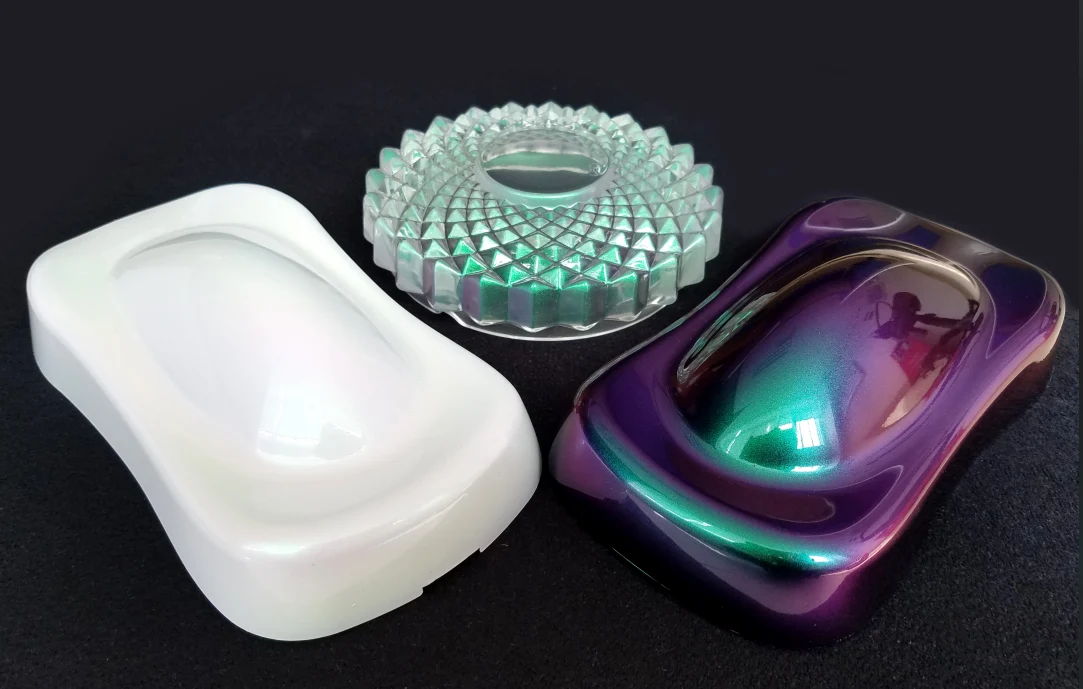
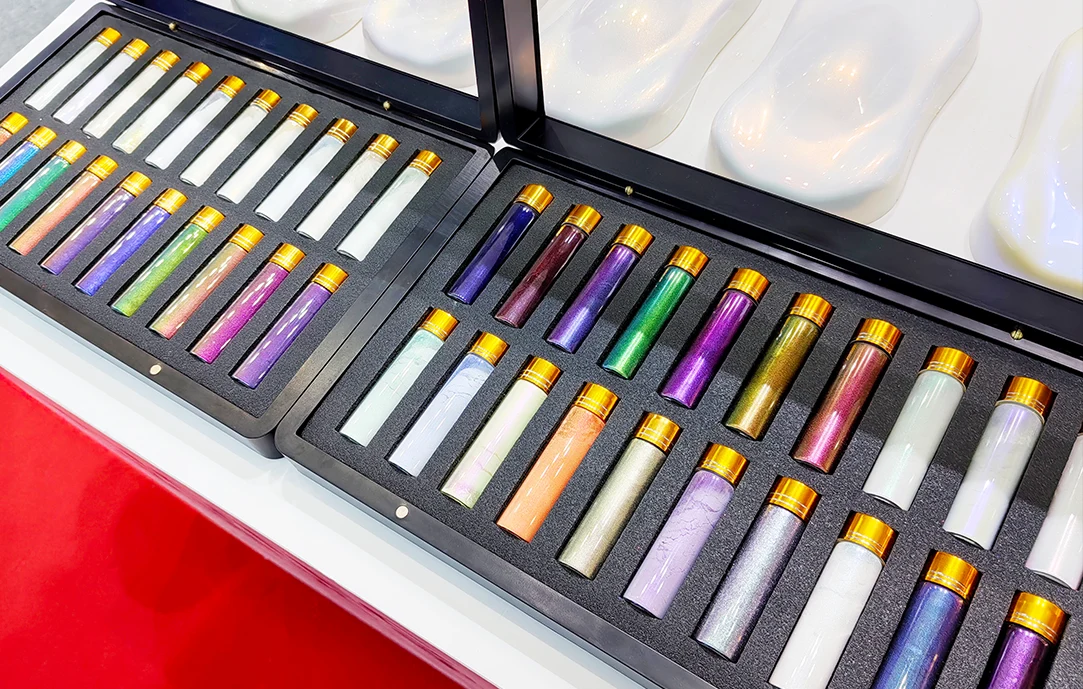
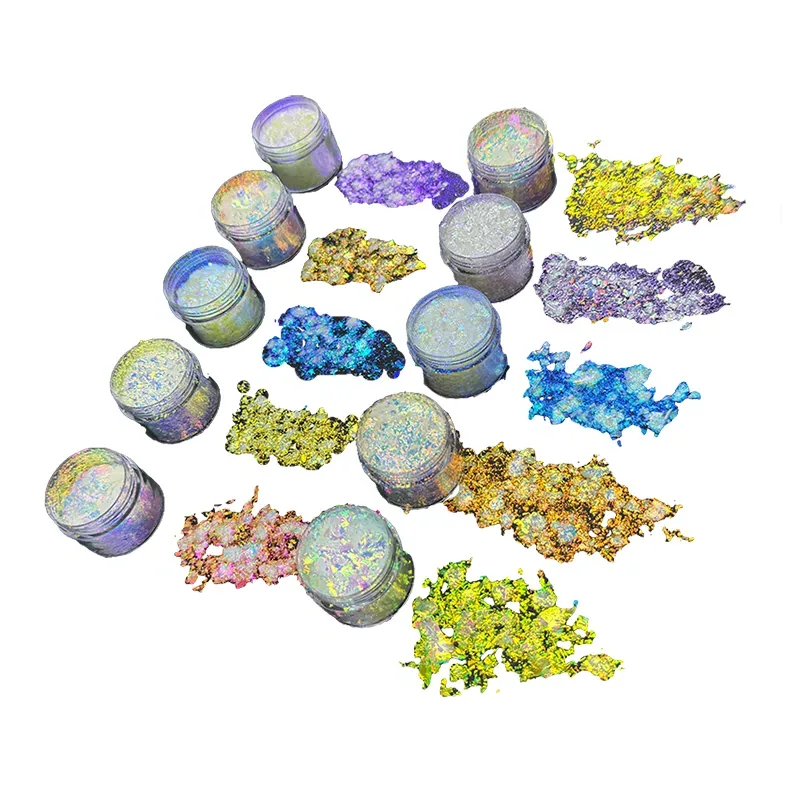
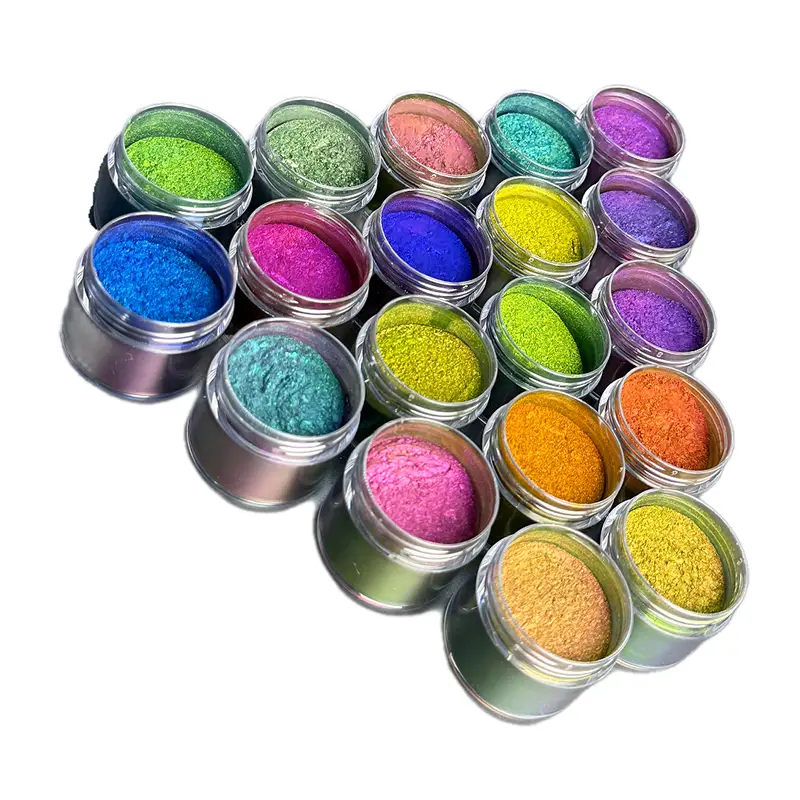
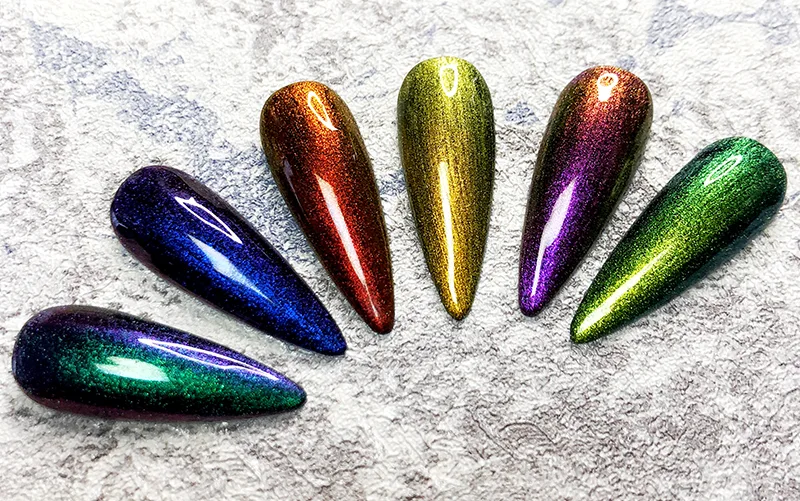
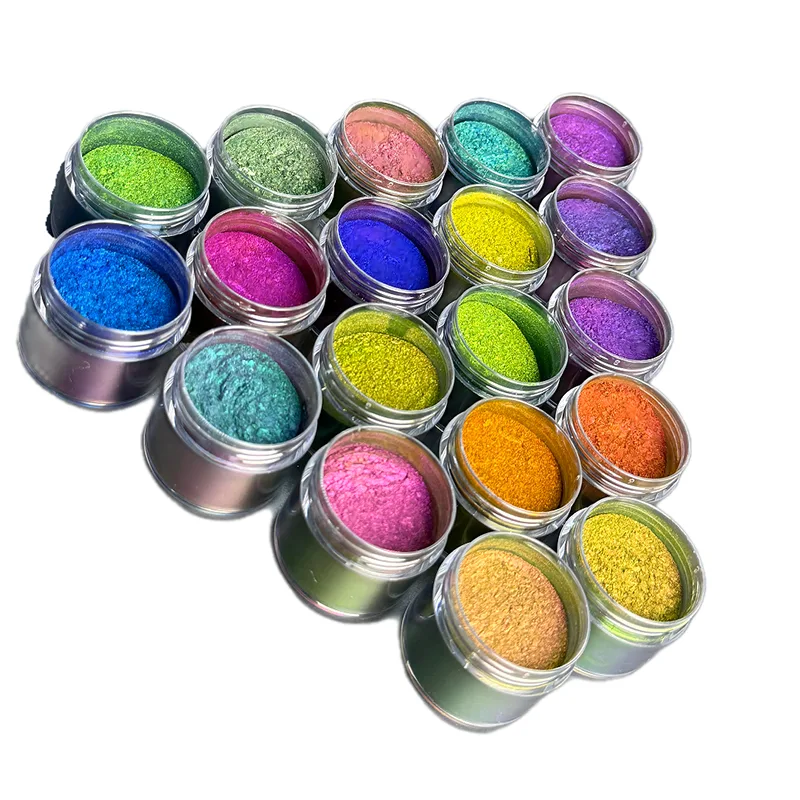
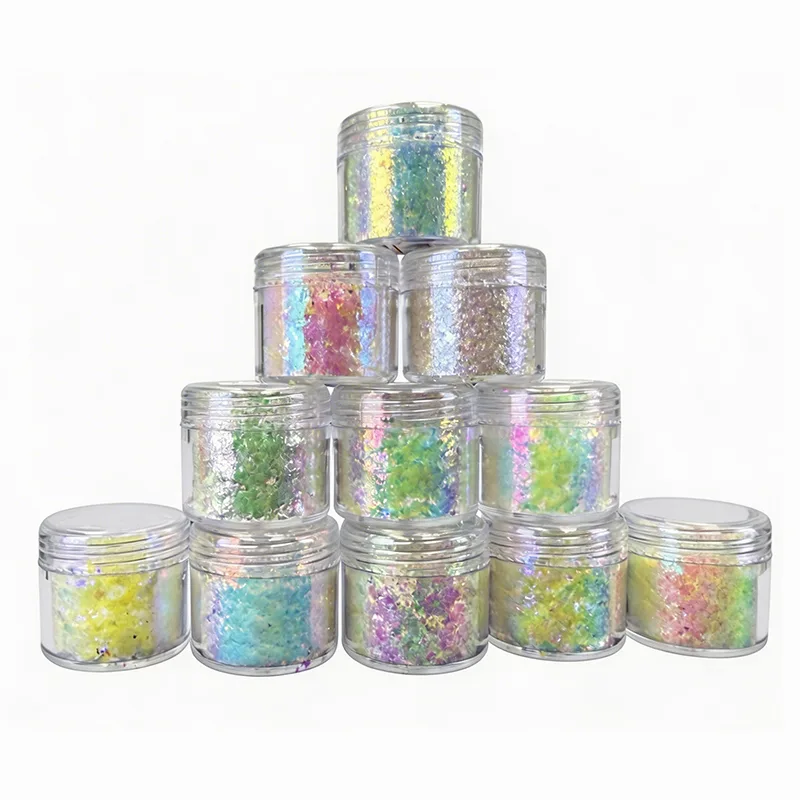
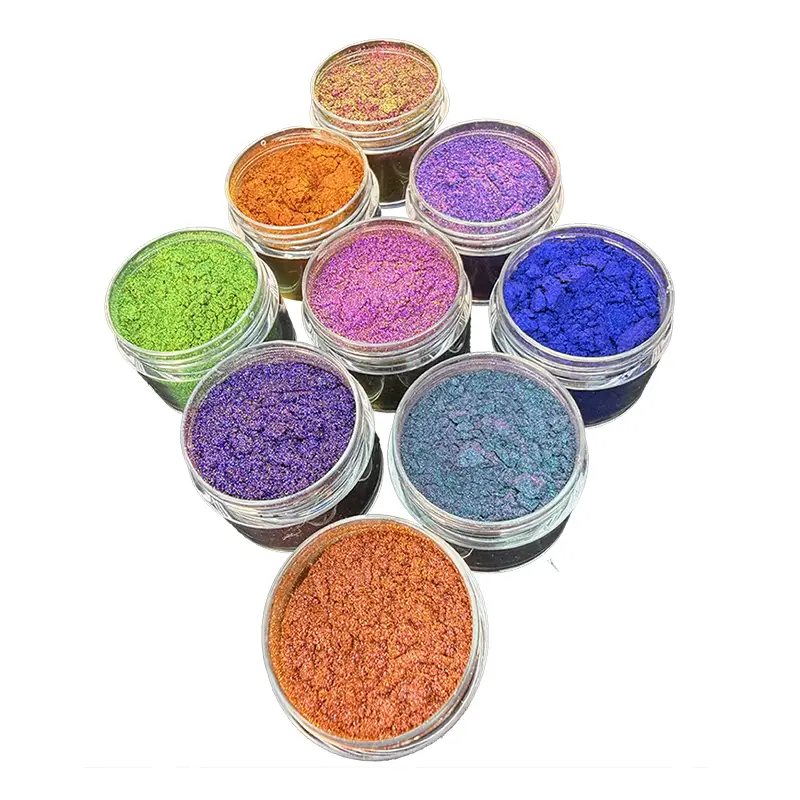
High-chroma transparent chameleon pigments are designed to create a dynamic color experience rather than a single fixed color. Their visual appearance can shift as the viewing angle, light direction, surface geometry, base color, coating transparency, and application thickness change. For scale models, collectibles, custom art, resin pieces, and decorative surfaces, this makes them especially useful when a conventional solid color cannot provide enough depth or visual movement.
However, achieving a convincing chameleon finish is not simply a matter of adding more pigment. Transparent effect pigments allow the underlying surface and base coat to influence the final appearance, while uneven film thickness or unsuitable application conditions can weaken color separation. A carefully prepared surface, appropriate base layer, controlled pigment concentration, consistent application, and compatible clear finish are therefore essential.
High-chroma transparent chameleon pigments are special-effect color materials that create strong color transitions while maintaining a degree of transparency. Unlike conventional pigments that primarily provide one stable color, these pigments interact with light in a way that allows different hues to become visible as the viewing angle changes.
Their transparent character is particularly important for model finishing and artwork. Instead of completely covering the surface underneath, the pigment can work together with a reflective, metallic, dark, or colored base. This creates a layered visual appearance in which color, reflection, and depth contribute to the final result.
Current pigment technologies commonly use carefully engineered flake structures and multilayer optical coatings to produce angle-dependent color effects. The exact appearance depends on the pigment construction as well as the complete coating system in which it is used.
| Characteristic | Visual Meaning | Value for Creators |
|---|---|---|
| High chroma | More vivid and noticeable color | Helps small models and details attract attention |
| Transparency | Allows the base layer to influence the finish | Creates depth and layered effects |
| Color shift | Different hues appear at different angles | Adds movement to static surfaces |
| Optical reflection | Light creates changing highlights | Improves premium and dimensional appearance |
The defining feature of a chameleon pigment is its dependence on viewing conditions. When light interacts with engineered optical layers inside or around pigment flakes, certain wavelengths can be enhanced while others are reduced. As the relationship between the light source, surface, and observer changes, the reflected color can change as well.
This is why a model painted with a blue-to-purple or green-to-gold effect may appear predominantly blue from one direction and noticeably purple or green from another. The pigment itself has not mechanically changed color. Instead, the optical interaction changes the wavelengths reaching the viewer.
The phenomenon is related to thin-film interference and controlled optical structures used in special-effect pigments. Modern commercial chameleon pigments can use transparent flakes with engineered coatings to generate distinct color-flow effects.
Base surface + transparent chameleon layer + light direction + viewing angle + surface geometry = perceived final color.
This also explains why product photographs should not be treated as an exact representation of the finished color. A single photograph captures one lighting and viewing condition, while a real object may display several colors during movement.
Scale models present a unique finishing challenge: their surfaces are small, their shapes often contain sharp curves and recessed details, and the final appearance is judged at close range. A conventional flat color can make an otherwise sophisticated model look visually simple. Transparent chameleon effects can introduce another layer of visual information.
Curved surfaces are especially interesting because different sections can face different directions at the same time. As a result, one model can display several related hues across a single component. This is useful for sports cars, concept vehicles, aircraft, motorcycles, robots, sci-fi figures, fantasy miniatures, helmets, and collectible sculptures.
For model painters, the key benefit is not simply “more color.” It is the ability to make the same surface visually evolve as the viewer moves around it.
Artists can treat transparent chameleon pigments as a visual layer rather than a conventional opaque paint. This makes them suitable for controlled layering, glazing-style effects, resin art, decorative objects, mixed-media pieces, custom panels, sculptures, and experimental surfaces.
A transparent effect layer can preserve some of the visual information beneath it. For example, a metallic foundation can provide reflection while the chameleon layer adds a colored transition. A dark foundation can increase contrast and make the effect appear deeper and more dramatic. A tinted foundation can be used when the artist wants to push the overall palette in a particular direction.
Build translucent visual depth without completely hiding the underlying surface.
Use changing reflections to create movement across sculptural forms.
Combine smooth and curved areas to create different optical responses.
Explore combinations with resin, clear coatings, metallic layers, and other finishes.
The base layer is one of the most important variables when working with transparent chameleon pigments. Because the effect layer does not necessarily behave like a fully opaque conventional color, the surface underneath can significantly influence the perceived result.
Dark or black bases often provide strong contrast and help color transitions appear more clearly. Technical guidance from pigment manufacturers consistently notes that darker backgrounds can strengthen reflected color separation, while lighter backgrounds may reduce the visual contrast of some transparent effects.
| Base | Typical Visual Direction | Potential Use |
|---|---|---|
| Black / very dark | Strong contrast and deeper perceived color | Dramatic models, automotive-style finishes, collectibles |
| Silver / metallic | Bright reflective character | Model vehicles, futuristic objects, metallic artwork |
| Colored base | More customized overall palette | Artistic experimentation and custom finishes |
| Light / white | Potentially softer and less contrasted | Subtle effects where a restrained appearance is desired |
The best base should therefore be selected through physical testing rather than color names alone. The same pigment can produce noticeably different results when the base color, binder transparency, application thickness, or lighting changes.
Many disappointing chameleon finishes are caused not by the pigment itself but by inconsistent application. Because transparent effect layers reveal and interact with the layers underneath, variations that might be less noticeable with opaque paint can become visually obvious.
For transparent chameleon coatings, controlled thin layers are often preferable to attempting to achieve the complete effect in one heavy application. Practical model-finishing guidance also emphasizes even coats and a suitable reflective base when using transparent color-shifting layers.
Understanding the difference between a conventional pigment and an optical effect pigment helps creators choose the right material for the intended visual result.
| Factor | Conventional Pigment | Transparent Chameleon Pigment |
|---|---|---|
| Main purpose | Provide a relatively stable color | Create dynamic optical color transitions |
| Transparency | Varies by pigment | An important part of the visual effect |
| Base influence | Often limited for opaque colors | Can be highly significant |
| Viewing angle | Usually has limited impact | Central to the visual effect |
| Application control | Generally straightforward | Requires greater attention to layers and consistency |
The most common customer frustration is the gap between the expected color-shifting effect and the result on the finished object. Several practical factors can explain this difference.
A pale or unsuitable base may reduce the visual separation between the shifting colors.
Different coating thicknesses can create visible inconsistencies across the same model.
Insufficient dispersion can reduce uniformity and weaken the intended appearance.
The effect is optical, so lighting direction and intensity strongly influence what the viewer sees.
Rough or irregular surfaces can scatter reflected light and soften color transitions.
A pigment should be tested under application conditions close to its final intended use.
For this reason, experienced buyers should evaluate physical samples using the actual or representative base material, coating system, application process, and lighting environment whenever possible.
A controlled workflow reduces trial-and-error and makes it easier to reproduce a successful finish.
Buyers often focus on color names, sample photographs, or a single demonstration panel. Those references are useful for initial screening, but they should not replace application testing. A pigment's final appearance depends on the complete formulation and processing conditions.
This approach is particularly important for professional model manufacturers, collectible brands, artists producing repeatable product lines, and buyers developing OEM or customized finishes.
High-chroma transparent chameleon pigments can be considered for a broad range of decorative and creative applications when the coating or material system is compatible.
| Application | Potential Benefit | Important Consideration |
|---|---|---|
| Scale models | Dynamic and premium surface appearance | Control small-area application carefully |
| Collectibles | Distinctive limited-edition finishes | Repeatability between production batches |
| Resin art | Layered depth and color movement | Compatibility with resin system |
| Sculptures | Highlights curved and complex geometry | Surface smoothness and gloss |
| Custom art panels | Creates movement without animated components | Lighting environment |
| Decorative finishes | Adds visual differentiation to premium surfaces | Complete coating compatibility |
Yes. They are particularly useful for model cars, motorcycles, aircraft, figures, robots, collectibles, and other surfaces where a dynamic finish is desired. The pigment should be tested with the intended primer, base coat, binder, and clear coat before full application.
The color shift is an optical effect. Changes in viewing angle and light direction alter the wavelengths of light reflected toward the observer, causing different hues to become dominant.
Not necessarily. A dark base is commonly used when strong contrast and a dramatic color shift are desired, but metallic, colored, or other bases can produce different artistic results. The appropriate base depends on the intended finish.
Photography captures only one lighting and viewing condition. The final appearance can also change with base color, binder transparency, pigment concentration, coating thickness, gloss, surface geometry, and application technique.
Many transparent effect pigments are designed for use in compatible clear or translucent coating systems, but compatibility should be confirmed with the pigment supplier and tested before production. The correct binder, solvent system, dispersion method, and curing conditions matter.
They can be highly useful for professional artwork when the material is matched to the intended substrate and coating system. Their ability to create changing colors can be particularly valuable for sculptures, resin art, custom panels, collectible designs, and mixed-media projects.
Begin with a controlled substrate, maintain consistent base coverage, use a suitable pigment concentration, apply even layers, control drying conditions, and evaluate the finished surface from multiple angles. Small-scale sample testing is strongly recommended before larger projects.
Buyers should ask about available color-shift directions, particle characteristics, recommended dosage, compatible binders, dispersion requirements, application methods, sample availability, technical documentation, packaging, production consistency, and support for customized projects.
High-chroma transparent chameleon pigments offer creators a practical way to move beyond static surface color. Their ability to reveal different hues according to viewing angle, lighting, surface shape, and coating structure can add depth and movement to models, collectibles, sculptures, resin artwork, and decorative finishes.
The most important lesson is that the pigment should be considered as part of a complete finishing system. Base color, transparency, film thickness, surface quality, dispersion, application method, gloss, and lighting all influence the final visual result. A well-controlled sample test can therefore be more informative than a product photograph or color name.
For projects requiring vivid color transitions, transparent optical effects, customized finishes, or consistent results across repeated production, working with an experienced pigment supplier can help reduce formulation uncertainty and shorten the development process.
Huizhou Foryou Optical Technology Co., Ltd. focuses on optical color-effect solutions designed to help creators and product developers explore vivid, transparent, and dynamic surface finishes. Whether you are developing scale models, collectible products, artistic surfaces, or customized decorative finishes, discuss your application requirements with the technical team and evaluate the right pigment system through samples and testing.
Need a customized color effect or pigment solution? Contact us to discuss your project requirements.