Classic opaque chameleon pigments can transform an ordinary automotive surface into a dynamic finish that changes appearance as viewing angles and lighting conditions shift. For car-wrap manufacturers, detailing businesses, vehicle customization brands, and automotive coating developers, these pigments offer an effective way to create distinctive visual effects while maintaining strong color coverage. This guide explains how classic opaque chameleon pigments work, what affects their performance, how they should be incorporated into wrap systems, and how to avoid common problems such as weak color shift, uneven appearance, poor dispersion, and premature surface degradation.
Choosing a pigment for automotive wrap is not simply a matter of selecting the most attractive color. The pigment must work with the entire wrap system, including the film substrate, adhesive, printable or coating layer, protective layer, and application process. Classic opaque chameleon pigments are particularly interesting because they combine strong visual coverage with angle-dependent color variation. When properly formulated, they can provide a premium appearance without requiring a completely conventional solid-color finish. This article covers pigment fundamentals, performance considerations, formulation practices, application issues, quality control, and practical purchasing considerations.
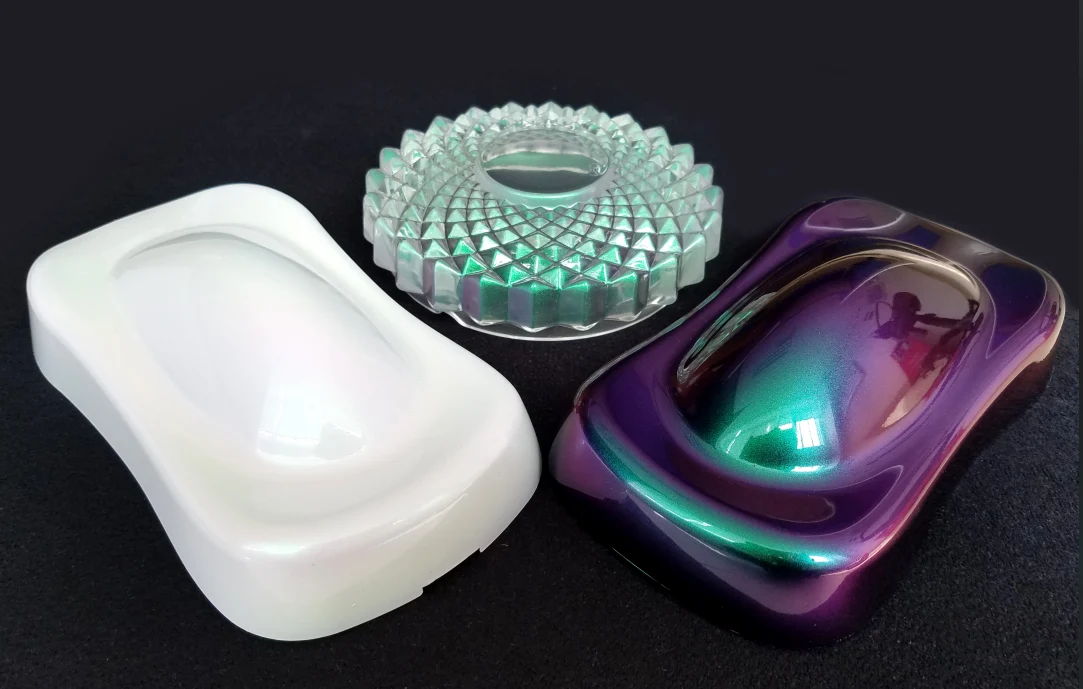
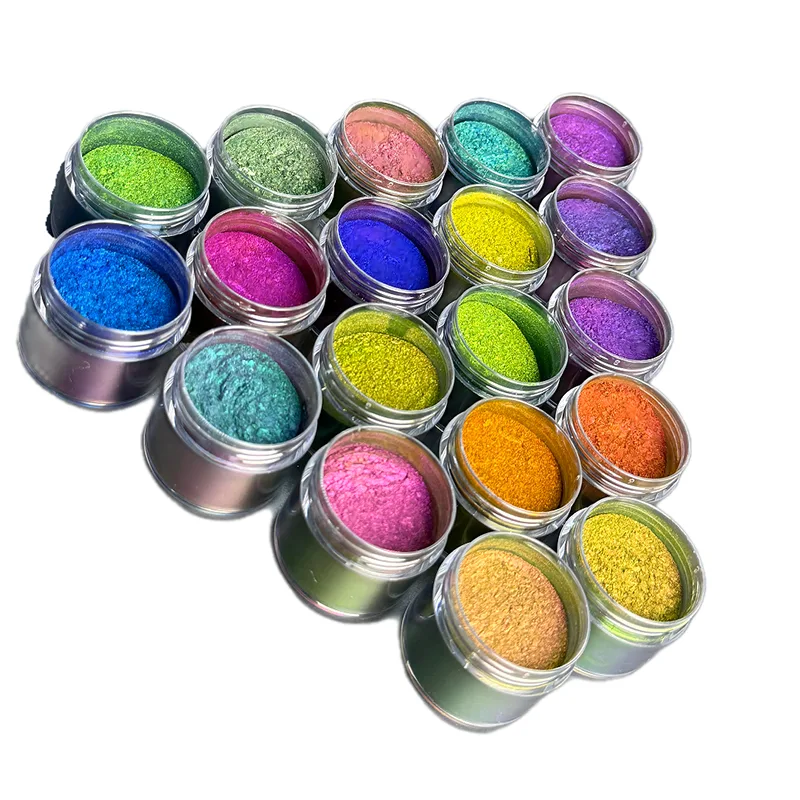
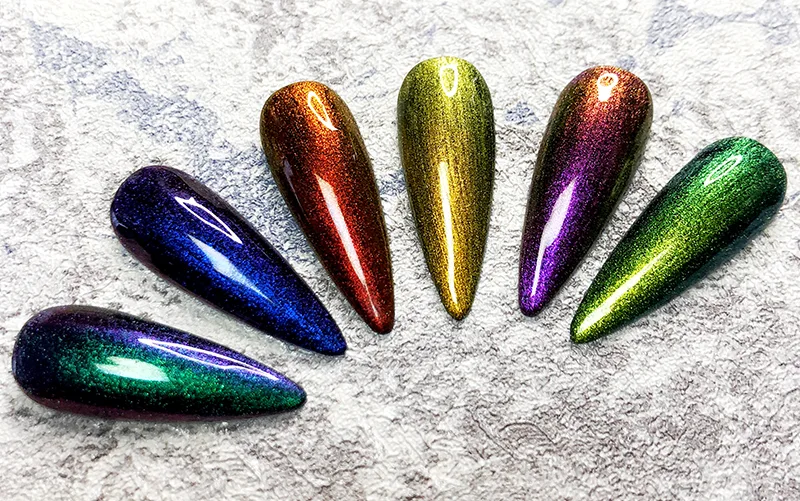
Classic opaque chameleon pigments are effect pigments designed to produce a noticeable change in perceived color when the viewing angle, illumination, or surface orientation changes. Unlike a conventional automotive pigment that generally maintains a relatively stable color from different angles, a chameleon effect creates visual movement across the vehicle surface.
The term opaque is especially important for car-wrap applications. A strongly covering pigment can help establish a more solid visual foundation, allowing the intended effect to remain visible without depending excessively on the original color of the vehicle beneath the wrap. This can be valuable when a wrap manufacturer needs consistent visual results across different base films or application environments.
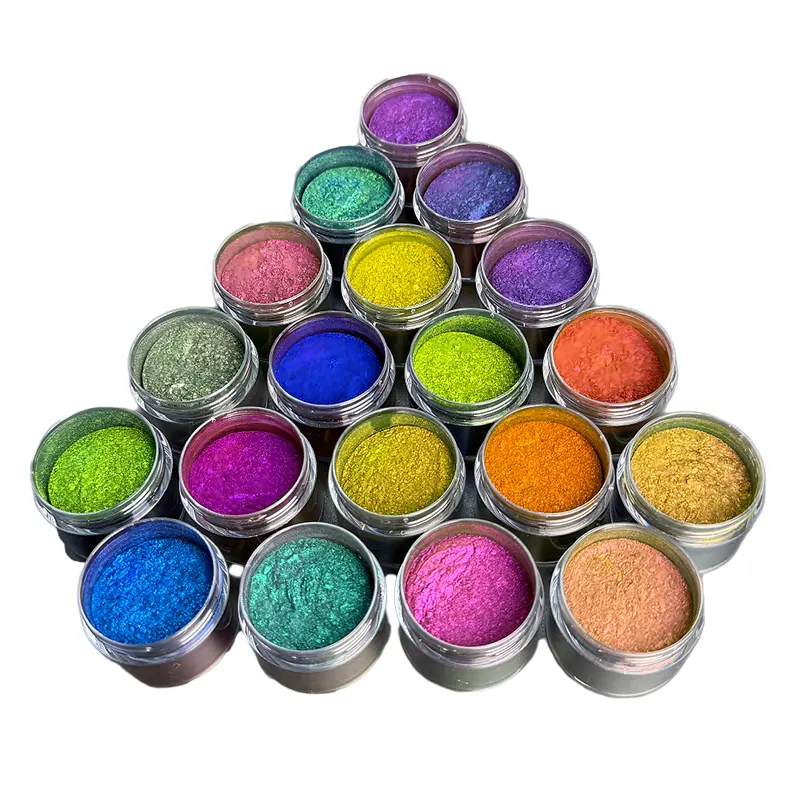
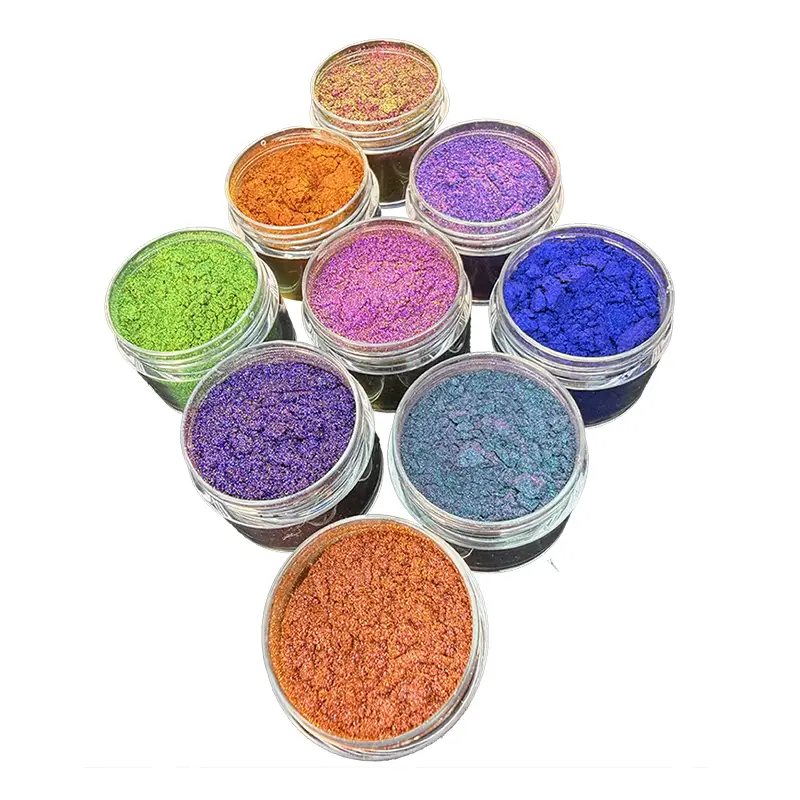
The final appearance is influenced by pigment structure, particle characteristics, concentration, dispersion quality, coating thickness, substrate color, viewing angle, and lighting. Therefore, a pigment should be evaluated as part of a complete wrap formulation rather than as an isolated color sample.
Vehicle wraps are exposed to demanding visual and physical conditions. Large body panels make even small inconsistencies easy to notice, while curves, recesses, edges, and overlapping sections can change the way a finish reflects and distributes light. A pigment that performs well in a small laboratory sample may therefore behave differently when transferred to a large automotive surface.
Classic opaque chameleon pigments address one of the biggest market challenges in automotive customization: creating a finish that looks premium, distinctive, and visually active. Color-changing effects can make a wrapped vehicle stand out at exhibitions, dealerships, car shows, promotional events, and on the road.
At the same time, the effect must remain controlled. Excessive color variation, poor particle distribution, or inconsistent coating thickness can produce an unattractive patchy appearance. The goal is not simply maximum color shift; it is a balanced combination of coverage, optical effect, consistency, and practical processability.
Chameleon effects give automotive wraps a distinctive appearance that can differentiate a vehicle from standard solid, metallic, or glossy finishes.
The perceived color changes with viewing conditions, adding depth and movement to large body panels.
Opaque formulations can help provide a more substantial visual foundation and reduce dependence on the underlying surface appearance.
Effect pigments can support specialty wrap collections aimed at enthusiasts, luxury vehicles, motorsport, commercial branding, and promotional applications.
Another advantage is design flexibility. By adjusting the surrounding color system and pigment loading, formulators can develop different levels of visual intensity. This allows brands to create coordinated product families instead of relying on a single dramatic finish.
Several factors determine whether a classic opaque chameleon pigment performs successfully in a car-wrap system. Evaluating only the color shown in a sample card can lead to disappointing results.
| Factor | Why It Matters | Potential Problem |
|---|---|---|
| Particle characteristics | Influence optical response, appearance, and process behavior. | Poor effect or inconsistent surface appearance. |
| Dispersion | Helps distribute pigment uniformly through the coating system. | Cloudiness, streaking, or visible color variation. |
| Pigment loading | Controls coverage and strength of the visual effect. | Weak effect or excessive processing difficulty. |
| Binder compatibility | Determines how well the pigment integrates into the coating. | Poor stability, settling, or surface defects. |
| Film thickness | Affects optical consistency and color development. | Different panels may appear noticeably different. |
Environmental resistance is another major consideration. A vehicle wrap may encounter sunlight, temperature fluctuations, moisture, washing, road contaminants, and repeated cleaning. The pigment itself is only one part of the durability equation, so the complete formulation and protective construction should be evaluated under realistic conditions.
The first step is to understand the target wrap system. A pigment intended for one resin or coating technology should not automatically be assumed to perform identically in another. The formulation team should consider the resin, solvent or carrier system, viscosity, curing or drying process, coating equipment, substrate, and protective top layer.
Even a well-formulated pigment can produce inconsistent results if the coating or wrapping process is poorly controlled. Automotive body panels are large and frequently curved, meaning that coating thickness and film orientation can influence how the optical effect is perceived.
Surface preparation should be consistent from one vehicle panel to another. During installation, installers should also pay attention to stretching, heating, overlapping, and directional orientation. Excessive stretching can alter the visual density of the finish, while inconsistent orientation can make adjacent sections appear different under certain lighting conditions.
For professional wrap businesses, a standardized installation procedure is therefore just as important as pigment selection. Recording application temperature, handling methods, surface preparation, and post-installation care can help reduce variation between vehicles.
| Characteristic | Classic Opaque Chameleon | Conventional Color |
|---|---|---|
| Visual effect | Dynamic and angle-dependent | Generally more stable |
| Customization potential | High for specialty finishes | High, but usually color-focused |
| Coverage considerations | Strongly influenced by formulation | Usually easier to predict |
| Lighting response | Major part of the visual experience | Generally less dramatic |
| Best suited for | Premium customization and effect finishes | Standard color applications |
Neither category is universally better. The right choice depends on the desired appearance and production requirements. Chameleon pigments are particularly attractive when visual differentiation is a priority and customers expect more than a conventional single-color finish.
1. The color shift is too weak.
Possible causes include insufficient pigment loading, unsuitable film thickness, incompatible formulation conditions, or inadequate optical contrast. Test the pigment in several controlled concentrations rather than simply adding more pigment to the production batch.
2. The finish looks patchy.
Uneven dispersion, inconsistent coating thickness, or application differences can create visible variation. Check mixing procedures and coating uniformity before changing the pigment itself.
3. Pigment settles during storage.
Settling may be associated with the formulation's rheology, pigment characteristics, or insufficient stabilization. Storage testing and compatibility trials should be conducted before mass production.
4. Different panels look different.
Large automotive panels can expose differences in application direction, thickness, stretching, and lighting. Establishing standardized production and installation procedures can reduce this risk.
5. The finish loses visual quality over time.
UV exposure, environmental contaminants, abrasion, cleaning chemicals, and the protective layer can all affect long-term appearance. Testing the complete wrap construction is more meaningful than evaluating pigment alone.
Before approving a classic opaque chameleon pigment for commercial car-wrap production, buyers and formulators should consider the following points:
Purchasing an effect pigment solely because its sample looks attractive can create problems later. Buyers should first define the intended application and then discuss technical requirements with the pigment supplier.
For businesses developing specialty automotive finishes, working with an experienced pigment supplier can simplify the transition from visual concept to production formula. Huizhou Foryou Optical Technology Co., Ltd. can be considered as a potential supplier when businesses are evaluating optical-effect pigment solutions for applications such as automotive customization. As with any technical material purchase, buyers should review current product specifications, samples, compatibility, and application requirements directly with the supplier before final selection.
They can be suitable when properly formulated into a compatible wrap coating or film system. The complete construction should be tested for appearance, adhesion, processing behavior, and durability before commercial use.
The optical structure of the effect pigment causes light to interact with the pigment in a way that changes the perceived color or tone as the viewing angle changes. The surrounding formulation and surface construction also influence the final effect.
Strong opacity can help provide more consistent visual coverage, but matching still depends on pigment loading, film thickness, dispersion, substrate, application technique, and production controls.
No. Compatibility can vary between resin, carrier, solvent, curing, and processing systems. A formulation trial should be performed before production approval.
Focus on uniform dispersion, consistent coating thickness, controlled processing, and standardized installation procedures. Testing large panels is particularly useful because small samples may hide application-related inconsistencies.
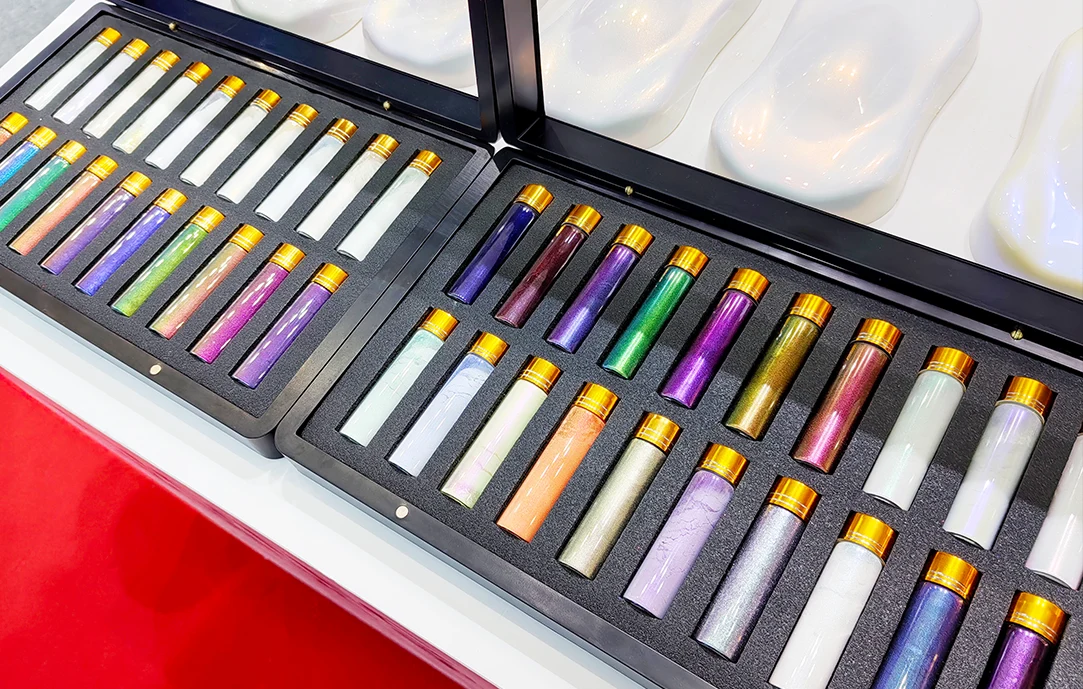
Evaluate appearance, color shift, dispersion, compatibility, storage stability, processing behavior, coverage, and performance of the complete wrap system. A production-scale trial is recommended before committing to a large order.
Classic opaque chameleon pigments offer car-wrap manufacturers a practical route toward more distinctive and visually dynamic automotive finishes. Their value comes from more than color change alone. Strong coverage, controlled optical effects, dispersion quality, formulation compatibility, processing stability, and long-term performance all contribute to the success of the final wrap.
The most reliable approach is to evaluate the pigment as part of the complete automotive wrap system. Start with laboratory samples, verify compatibility, test multiple concentrations, examine large panels, and assess the finished construction under different lighting and viewing angles. These steps can help reduce costly production problems while giving designers greater freedom to create premium vehicle finishes.
If you are developing a new automotive wrap collection or looking for classic opaque chameleon pigments for a specific formulation, Huizhou Foryou Optical Technology Co., Ltd. can be contacted to discuss product information, samples, technical requirements, and potential application solutions.
Contact us to discuss your required color effect, application system, sample needs, and production goals.